We’d spent time twice before in Victoria, BC, Canada, but it had been several years since our last visit. With fond memories of the city decorated for Christmas, we decided to book into our timeshare, Worldmark Victoria, for five days and invite Anne’s sister Charleen and her husband Dave to spend a couple of days with us.
Anne and I drove to Sequim, WA, on Saturday, December 17, so we could catch the early ferry from Port Angeles to Victoria the next morning. On Sunday, after forty minutes queueing to get onto the ferry, we boarded at 8:20.

I took photos of the Port Angeles harbor and a few coming into Victoria, but most of the time we spent watching the other people on the ferry.
 |
| Selfie asleep on the ferry |
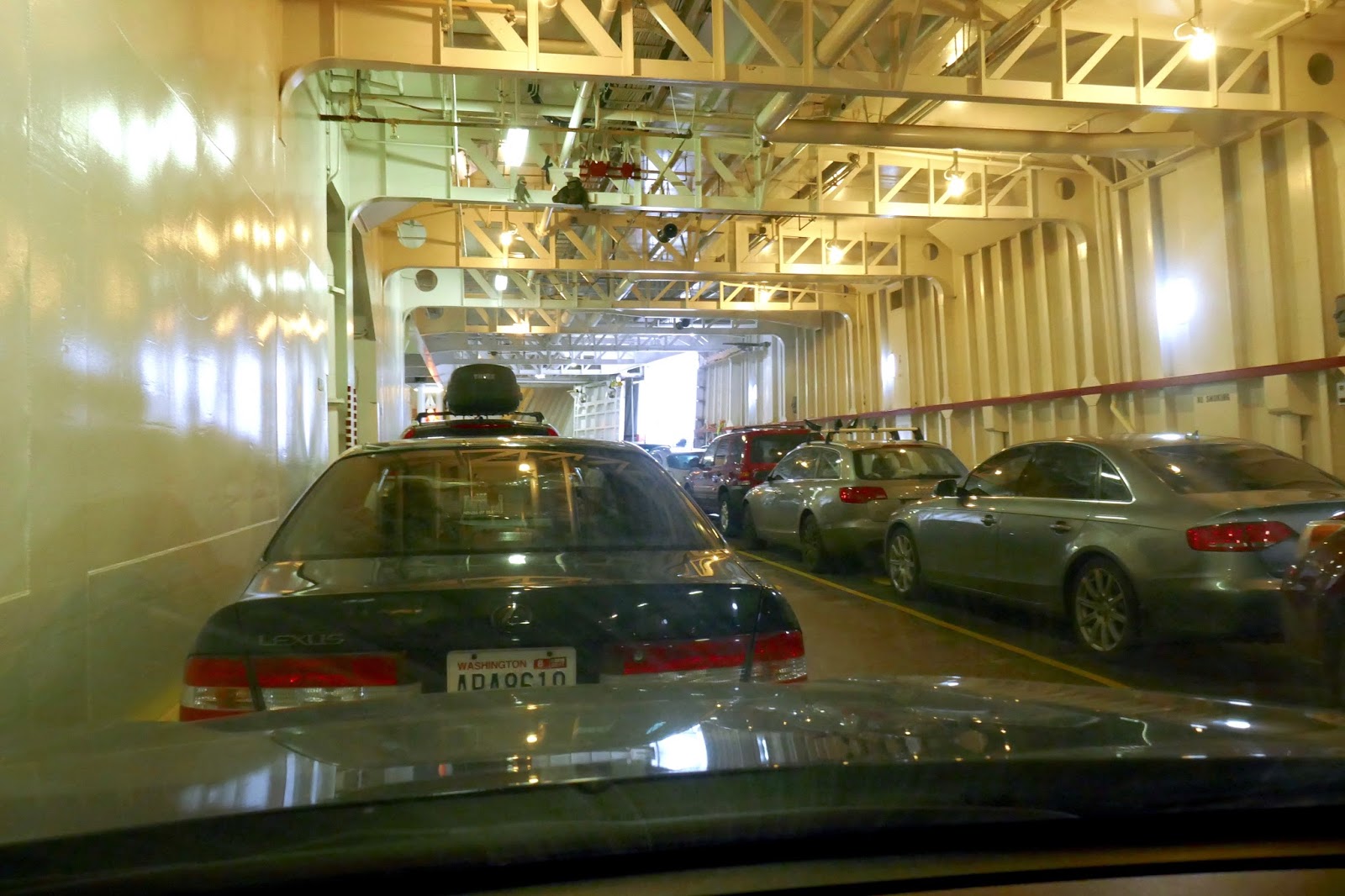
We started disembarking at 10:30 and had cleared Canadian Customs (“We are staying for five days…at the Worldmark…just vacationing…No, we have no fresh fruits or vegetables with seeds…Thank you.”) by 11:00.
Our Worldmark 2-bedroom apartment was ready early, about twenty minutes after we arrived. The unit was excellent—two bedrooms, two baths, full kitchen, dining room, living room with gas fireplace, washer and drier, and patio.

Our view was of a marina of decorated boats, the bay, and part of Fisherman’s Wharf’s houseboats. Lovely.
We walked to downtown Victoria along the bay—a cold, windy walk of about 20 minutes. We learned our lesson on that first walk and most of the rest of the time walked inland from the shore—shorter and more wind protected.
 |
| Anne viewing a Robert Bateman original on one of her favorite subjects. |
 |
| Buy a new Irish cap at the Out of Ireland shop. |
Victoria has a pleasant downtown shopping district with interesting shops (Irish, travel, bookstores, specialty chocolates, etc.) and its share of tourist shops (t-shirts, fridge magnets, moose droppings candy, maple syrup, etc.). We lucked into a great lunch spot, Pagliacci’s

—loud, crowded, serving delicious brunch and pasta fare. I hadn’t noted the restaurant in my searches, but locals say it’s just about the best in town.
Dinner was in our unit—martinis, BBQ chicken and bagels from a local upscale market. The availability of the full kitchen certainly helps keep costs reasonable.
Our first full day in Victoria started with breakfast in and a plan to drive around the bottom of Vancouver Island (still in Victoria). We walked the half-mile out Ogden Point Breakwater which gave us nice views of the bay.


On the walk we met a local lady (she’s the one who took our photo by the harbor light)

and had a wonderful chat with Wendy as we walked back to our car.
 |
| The birds at Glover Point loved our car. |
We made several stops for photos along the route, but the most interesting stop was at the Chinese Cemetery at Harling Point.
 |
| The path to the Chinese Cemetery. |

Designated a Nat’l Historical Site in 1996, the Harling Point setting was selected in accord to the ancient concept of feng shui (harmony with the environment). Older graves were moved from the Old Cemetery and Ross Bay Cemeteries in 1903, and burials continued until the early 1950s. The cemetery has several information plaques and is very peaceful.
We visited one of the many villages of Victoria, Oak Bay Village,
 |
| Street sculpture in Oak Bay Village. |
with its interesting shops and nice Irish pub,

The Penny Farthing. After sharing a couple of tasty burgers and a Guinness in the Farthing, we discovered [I’m sure others had “discovered” it before, but it was new to us.] Roger’s Chocolates—sinfully delicious and almost as good as See’s.
The drive back to WM was through another of Victoria’s neighborhood villages, Cook Street Village. Once at our digs, Anne stayed in to rest while I walked down to Fisherman’s Wharf (five minutes from our apartment) for photos. I first stopped at Moka House Coffee and Bistro for a latte—to keep me warm, of course.

I wandered among the houseboats and shops on the wharf for a half hour or so.
 |
| This harbor sealant Fisherman's Wharf floated just beneath the surface until someone would hold out food. |
On the way back I picked up a couple of fish tacos at Finest at Sea

(food cart and seafood market) to be appetizers for dinner which was left over tortellini and toast. Then it was time to work on photos with Christmas music playing in the background.
Tuesday, the fourth day of our trip, started with another relaxing morning with breakfast of sausage, eggs, bagels, and fruit. We tried to book in for a Christmas High Tea on Thursday, but all the bookings were taken—must book sooner next time.

After some nice rainbow photos from our patio, we walked to town (about 11;00) for more shopping before Dave and Charleen walk off the ferry at 3:30.
 |
| A rainy downtown Victoria. |
More chocolates from Roger’s was the first order of the day, followed by T-shirts for Anne and a browse in a specialty hat shop.


We took a latte break at Starbucks after a wander through the two blocks of Victoria’s Chinatown—small, but has some picturesque shops.The find of the morning was a pen shop, Simply the Best, where Anne and I each bought a Lamy rollerball pen. In the shop we had a very nice visit with the owner and his friend.
 |
| And what does the upside-down face on the totem mean? |
On the way back to WM we walked through Totem Park next to BC Museum and shopped in the museum’s gift shop—it was nice to have the exchange rate in our favor. It was another cold, windy walk from the museum to WM.
NEXT: Part 2


