Showing posts with label sheep. Show all posts

Tuesday, May 26, 2026

#238 PD Numbers, Facts, and Photos


PD Numbers, Facts, and Photos.  This post goes into some of the statistics about Parkinson’s Disease, presents a few “who knew” facts about the condition, and photos from my back files from 2011 and 2012 just for the fun and beauty of them.


Not a luxury stay in north Scotland village.


PARKINSON’S DISEASE BY THE NUMBERS


Anne tees off on the 3rd hole at St Fillans GC. We were members of the club for 10 years.

Black Headed gull


        — 1.2 million Americans live with PD

— 90,000 new cases are diagnosed in US yearly, that’s 200  new cases a day

— 100 sufferers dies from PD related causes a day

— Over 10 million individuals are affected globally 


A "Force" (waterfall) in the Lake District in England.

The Falls of Dochart in central Scotland during the rainy season, January through December.

Gannet 


— Men are 1.5 times more likely to have PD than women

— Approximately 15% of people with PD have a family history with the disease, 85% don’t

— Approximately 4% of PD sufferers are diagnosed before the age of 50, it’s called  “early onset”


Stone circle near Killin in the Highlands.

Maes Howe, a neolithic burial tomb, on Orkney Islands with double rainbow.


— Combined direct and indirect costs of PD (treatment, Social Security, lost income) is expected to be $82.2 billion in 2026

— The cost is expected to rise to $112.6 billion by 2045

— Medications average $2500 yearly per individual 

— For professional treatment, 50% see neurologist, 9% see movement disorder specialists, 29% see primary care physicians, 11% seek other treatments [My treatment team consists of my PCP, neurologist, specialized movement and voice therapists, and caregiver Anne.]

— Hundreds of millions of dollars are spent annually by private foundations and non-profits on research, clinical care, and professional training related to PD ($100-$300 million yearly by Michael J Fox Foundation, $40-$50 million annually by The Parkinson’s Foundation, and lessor amounts by others).


Scottish Thistle

Branklyn Gardens in Perth, Scotland


PARKINSON’S “WHO KNEW” FACTS AND INFORMATION


*Parkinson’s Disease hits every individual differently. No two people necessarily have the same symptoms, or the same timing of symptoms as anyone else.


*Non-motor symptoms (constipation, depression, sleep disruption, anxiety, fatigue, problems of cognition, pain, ED) can be more troublesome than major motor symptoms (bradykinesia or slowness of movement, resting tremor, rigidity, loss of balance).


*Most PD patients will experience micrographia — small, cramped handwriting that gets smaller as you write. My handwriting has gotten harder to read, but it does save paper. 


Anne at Machrihanish Dunes GC about 5 miles from Paul McCartney's estate in Scotland.


*If you die from a PD related cause, you have a much lower risk of dying from an auto accident. 


NEXT: I'll see what I can find, Maybe a mix of old and new.


Saturday, March 1, 2025

#223 Coos and Sheep


#223 Coos and Sheep

This post is dedicated to two iconic animals associated with Scotland. Besides the well known castles, kilts, and wild highland haggis, Scotland is known for its highland cows (hei’lan coos) and its abundant sheep with their darling lambs. The long-coated highland cattle and fuzzy sheep are particularly favorites of tourists—including myself. So, this post brings you a couple of stories from my travel book and many photos from my files. I sincerely hope you enjoy both.

These two weren't friendly as they guarded an ancient stone circle near Loch Ness.

Near Bushmill Distillery in Northern Ireland.

One of the more unusual varieties of highland sheep--Boreray, I think.

Saw these two lambs on our way to Machrie Moor on the Isle of Arran off Scotland's Ayrshire coast. They were as interested in me as I was in them.


First a little background. Scottish highland cattle are considered a rustic hearty breed effectively bred to withstand the harsh highland winters. The cattle are characterized by their long double coats and long horns. They generally are gentle by nature, but you should still always approach warily. The colors vary from an off-white to pure black (reds are often the most photographed). 


As for the sheep who outnumber the Scots, they are everywhere—most usually in the road—and the breeds are almost as many as there are hills in Scotland.

On the hills in Glen Clova, central highlands.

Typical. We're hurrying to a tee time on Fife near St Andrews and the sheep don't care.

In Sma'Glen, central Scotland, about 20 minutes away from Crieff where we spent most of our time.

The sheep keep the grasses cropped around the Kilmartin Valley standing stones.


Cows and Sheep on the Courses 

We knew something special was going on when the first green at Narin and Portnoo GC in County Donegal, Ireland, was surrounded by electrified fencing. We discovered that the land on which the first four holes of the course are sited was leased in the winter to a local farmer. To keep the sheep and cows off the greens, the club has surrounded the greens with electric fencing. The second time we played the course a couple of years later, the fencing was gone. The farmer’s lease had run out. Narin and Portnoo is not the only course where electric fencing is used to keep the animals off the greens. Brora GC, a championship track north of Royal Dornoch in Scotland, Achill Island, a beautifully sited nine-hole sheep pasture course off the west coast of Ireland, and Pennard GC in southern Wales still use the electric fencing to protect greens. It makes for an interesting round having to step over a live wire to get to the putting surface. Achill Island GC has another interesting feature. To break up the sheep droppings throughout the course, the grounds crew of one drags an old bedsprings behind a tractor. It does the job as well as fertilizes the fairways.


At Leadhills GC, the highest course in the UK at a little over 1200 feet elevation, in the southern uplands of Scotland has no fencing around the greens, but it has plenty of sheep. When we played no people were on the course except us, but there were sheep on practically every green. There were droppings from the sheep and their friends the rabbits on every green as well. At home we brush away droppings from our local oak and fir trees with our hats or hands. At Leadhills you cleared a path with your shoes or you moved the ball to an unobstructed location. It was a little difficult to play to a sheep infested green when your playing partner is saying, “Don’t hit them; they’re so cute.” Anne eventually had to hit right at a couple of sheep, but they quickly got out of the way. The sheep must get very good at dodging golf balls on their course. 

Tourists have to get used to sharing the road with locals at Staffin Bay, Isle of Skye.

Glen Quaich, southern highlands.


The same, evidently, wasn’t true at Southerndown GC in South Wales. The club’s centenary book contains a story of an early competition where a player’s shot hit a sheep and lodged in the wool at the animal’s posterior. The offended sheep bolted forward toward the green. The ball fell out much closer to the green than it would have had it not been carried. The argument then ensued about where the ball should be played--where it hit the sheep or where it finally came to rest. We’ve heard this story told at several other courses. Either sheep behinds have a magnetic attraction for golf balls in competition or it’s a Celtic golfer’s version of an urban myth. 

Black Angus cattle have the run of the northwest beaches near Durness.

The Black Angus do share the dunes with the lambs.


The St Fillans Cow Incident 

St Fillans Golf Club, a club where we are the only international members, is not a cow pasture course--most of the time. The course is a nine-hole gem in the Perthshire hills about 12 miles from our home-in-Scotland base in Crieff. St Fillans is nestled in a small valley surrounded by Highland hills and crags. Running along one side of the course is the small River Earn which flows out of Lochearn. Along the opposite side are cow and sheep pastures which butt up against the hills and an ancient walled off graveyard of the Stewart clan. Although quite flat, the course has interesting holes highlighted by the 3rd which is the only hole with any elevation. It plays from the top of a crag down toward the green about 280 yards away. With wind behind, I’ve driven the green. With the wind into us, a trap and rough on the right are seriously in play. The next two holes play around the edge of the crag which affects shots considerably. The course may be short and flat, but it’s definitely not easy. This sets the scene for our adventures at the sixth green. 


We were playing the course one day with our American golfing friends, Helen and Grady Morgan, who spent four days traveling with us on their tour of the UK. We had all teed off on the 220-yard par 3 (par 4 for ladies) 6th and were half way to the green when the course greenskeeper jumps off of his mower and starts yelling at us to stop the bulls from trampling the green. We quickly turned around just in time to see three young bulls or steers (I didn’t stop to look, but could tell they weren’t Bessies) who had broken through the fence and were heading for the green and us. Neither Grady nor I are farm boys and we didn’t want to start then, but we did what we could and jumped and yelled to try to turn the herd away from the green. We stalled the animals long enough for the greenskeeper to reach us with his mower and he herded them back into their field. We basked in our glory of a job sort of well done and finished our game. 

Scottish White Face, I think.

A Glen Quaich rancher is semi-famous for coloring his sheep in oder to thwart rustlers.


Several years later Anne and I were playing the course and caught up with a couple of women on the sixth who wanted to let us through. As we waited for the group ahead to clear the green, the ladies told us a story they heard about this hole and the day the whole herd of cows got out. Anne and I looked at each other and giggled and said, “We know that story. We’re the ones who corralled the herd, but it was only a herd of three young cows.” 

Galloway belted cattle (belties) are a hybrid breed of highland cow bred to survive on poor upland or highland moors. We saw these examples in Dartmoor Park in southern England. Remnants of a tin mine form the background.


Evidently our story has a life of its own. 

Shop on Edinburgh's Royal Mile.

A mom calling for her second lamb.

NEXT: I'll hunt up something.


Friday, May 24, 2024

#214 Paths and Roads


The topic for this post—late as it is—is paths and roads, the highways and byways we choose or are forced to travel. This topic is dictated by the current path Anne and I have had to travel recently. It’s a path littered with boxes and bags filled with too many things—extra clothes, dishes, books, photos, hats and much, much more. We’ve chosen to move into a single floor home from a three story home and thus have been forced to downsize from three bedrooms and a basement to two bedrooms and a den (small bedroom size but no window). And neither of us have been good about throwing or giving things away.

With fantastic help from Anne’s sister, her husband and son, Anne’s cousin from Redmond, and various friends, we’ve managed to get everything out of our house of 38 years and put it somewhere in storage, the new garage, or the new house. Now comes the next hard task of deciding what we need to and can keep, and what must go to family, friends, and favored local charities. It’s long road, but we’ve chosen it and are happy with our choice.

That leads me to the path for this post. I’ve poured over files of photos (digitals are easy keepers) for interesting paths and roads we’ve taken in the past. Hopefully, the paths and roads I find in may files will remind you of choices you’ve made and paths you’ve traveled. And may those bring back good memories for you. 


I’ll begin and end our travels with parts of the poem “The Road Not Taken” by Robert Frost. In between I hope to present some salient comments to guide our way.


The Road Not Taken   by Robert Frost


“Two road diverge in a yellow wood,

And sorry I could not travel both…” 


A younger Anne hiking the Cascade mountains in the early 1970s.

The Birks of Aberfeldy

A darling belle and lovely Scottish bluebells.

A typical path through an old Scottish forest.


“It’s not the destination, it’s the journey.”  —Ralph Waldo Emerson


Danger Road in Colorado.

The beech road into Drummond Castle near Crieff in central Scotland.

Birch forest in Cairngorm National Park, Scotland.

The Bridge to Nowhere on Isle of Harris, Outer Hebrides -- the road literally ends after you cross the bridge.


“Roads are a record of those who have gone before.”  —Rebecca Solnit, writer,   historian, activist


Dunnattor Castle

The climb to the fifth green at St Fillans GC, Scotland--many attempt it, few make it.

Heavy traffic on the Glen Lyon road. Guess who has the right of way.

Leadhills, Scotland, is one of the highest villages in the UK.


“People don’t take trips, trips take people.”  —John Steinbeck


Branklyn Garden path, Perth, Scotland.

Highland Gate

Farm road in Sma'glen, Scotland.

Tree tunnel near the east coast of Scotland south of Aberdeen.


“I may not have ended up where I intended to go, but I think I’ve ended up where I intended to be.”  —Douglas Adams


The myriad of paths at Zabriskie Point in Death Valley.

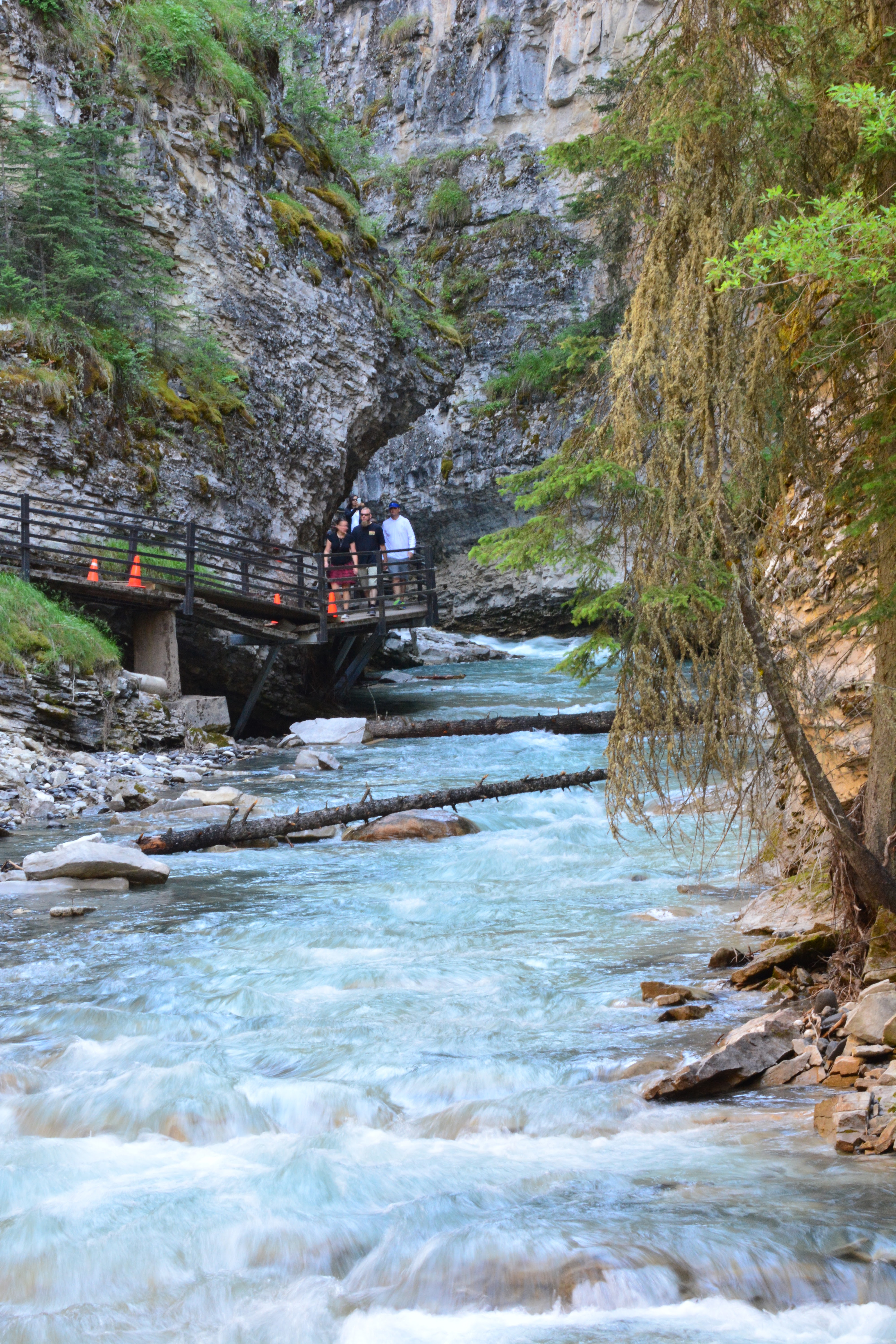
A unique path at Johnston Creek near Banff, Alberta, Canada.

Glen Lyon, the longest glen in Scotland.

Rush hour in Glen Quaich, Highlands.


“If you don’t know where you’re going, any road will get you there.” Lewis Carroll


Path into the Red Cullins, Isle of Skye.

This path leads to the oldest capital of Scotland, Dunadd.

Yewe shall go no farther!


“…Two roads diverged a wood, and I

I took the one less traveled by

And that has made all the difference.”


NEXT: Scotland May Be Calling