Showing posts with label roads. Show all posts

Friday, May 24, 2024

#214 Paths and Roads


The topic for this post—late as it is—is paths and roads, the highways and byways we choose or are forced to travel. This topic is dictated by the current path Anne and I have had to travel recently. It’s a path littered with boxes and bags filled with too many things—extra clothes, dishes, books, photos, hats and much, much more. We’ve chosen to move into a single floor home from a three story home and thus have been forced to downsize from three bedrooms and a basement to two bedrooms and a den (small bedroom size but no window). And neither of us have been good about throwing or giving things away.

With fantastic help from Anne’s sister, her husband and son, Anne’s cousin from Redmond, and various friends, we’ve managed to get everything out of our house of 38 years and put it somewhere in storage, the new garage, or the new house. Now comes the next hard task of deciding what we need to and can keep, and what must go to family, friends, and favored local charities. It’s long road, but we’ve chosen it and are happy with our choice.

That leads me to the path for this post. I’ve poured over files of photos (digitals are easy keepers) for interesting paths and roads we’ve taken in the past. Hopefully, the paths and roads I find in may files will remind you of choices you’ve made and paths you’ve traveled. And may those bring back good memories for you. 


I’ll begin and end our travels with parts of the poem “The Road Not Taken” by Robert Frost. In between I hope to present some salient comments to guide our way.


The Road Not Taken   by Robert Frost


“Two road diverge in a yellow wood,

And sorry I could not travel both…” 


A younger Anne hiking the Cascade mountains in the early 1970s.

The Birks of Aberfeldy

A darling belle and lovely Scottish bluebells.

A typical path through an old Scottish forest.


“It’s not the destination, it’s the journey.”  —Ralph Waldo Emerson


Danger Road in Colorado.

The beech road into Drummond Castle near Crieff in central Scotland.

Birch forest in Cairngorm National Park, Scotland.

The Bridge to Nowhere on Isle of Harris, Outer Hebrides -- the road literally ends after you cross the bridge.


“Roads are a record of those who have gone before.”  —Rebecca Solnit, writer,   historian, activist


Dunnattor Castle

The climb to the fifth green at St Fillans GC, Scotland--many attempt it, few make it.

Heavy traffic on the Glen Lyon road. Guess who has the right of way.

Leadhills, Scotland, is one of the highest villages in the UK.


“People don’t take trips, trips take people.”  —John Steinbeck


Branklyn Garden path, Perth, Scotland.

Highland Gate

Farm road in Sma'glen, Scotland.

Tree tunnel near the east coast of Scotland south of Aberdeen.


“I may not have ended up where I intended to go, but I think I’ve ended up where I intended to be.”  —Douglas Adams


The myriad of paths at Zabriskie Point in Death Valley.

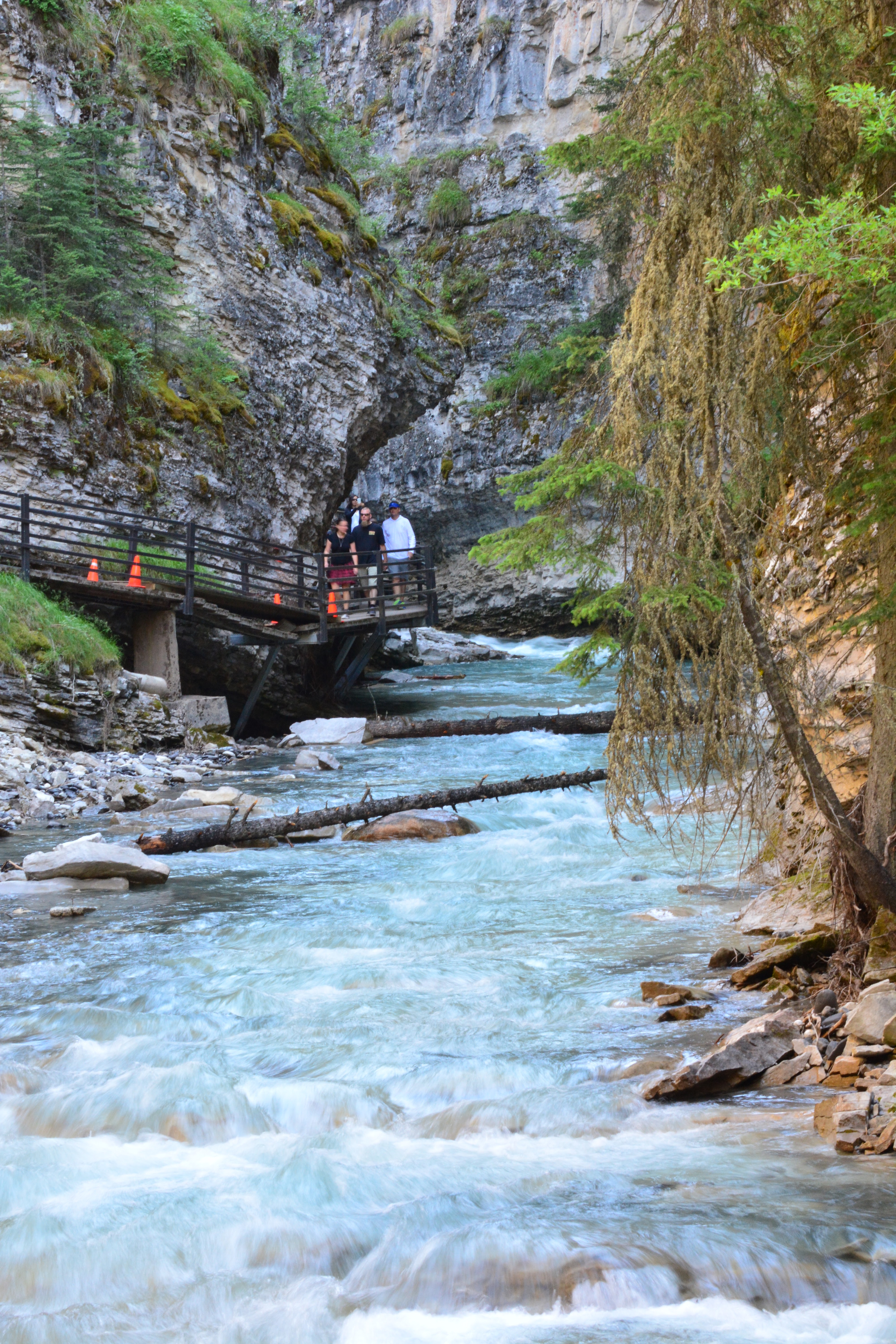
A unique path at Johnston Creek near Banff, Alberta, Canada.

Glen Lyon, the longest glen in Scotland.

Rush hour in Glen Quaich, Highlands.


“If you don’t know where you’re going, any road will get you there.” Lewis Carroll


Path into the Red Cullins, Isle of Skye.

This path leads to the oldest capital of Scotland, Dunadd.

Yewe shall go no farther!


“…Two roads diverged a wood, and I

I took the one less traveled by

And that has made all the difference.”


NEXT: Scotland May Be Calling

Thursday, July 5, 2018

Southwest 2018 #4: Mesa Verde, Mountain Roads, and Dinosaurs

Sun Temple Dwelling

Mesa Verde National Park
Cliff Palace

Cliff Palace is one of the cliff dwellings you can tour with a guide.
Cliff Palace

The park and now World Heritage Site was approved by President Teddy Roosevelt in 1906 along with the Federal Antiquities Act of 1906.  Mesa Verde, meaning “green table” in Spanish, was “discovered” by Mexican-American missionaries and explorers in the late 1700s. 
These two photos show Square Tower House.


The largest archeological preserve in the country, the park contains more than 600 cliff dwellings of Ancient Puebloans (Anasazi who occupied the area about 750 CE). The area was first settled by ancient natives in c. 7500 BCE and was abandoned by 1285 CE. Today, visitors can visually explore the remains of dwellings from the canyon rims and in some locations tour the ruins with park guides. 
Spruce Tree House is accessible from the main visitor area at the top of the mesa--there is a large Visitor Center at the bottom of the mesa.


We’ve visited several times and always find the views of the ancient cliff dwellings inspiring.

Durango to Silverton to Ouray to Grand Junction.

After four days in Durango our next destination was Grand Junction several hours north. The only practical route was over the mountains—around the mountains would have taken twice as long. The route gave us a full day of adventures.

 
     On the way out of Durango we caught up with the Durango & Silverton Narrow Gauge Railroad. The tourist train makes daily runs on the 45 mile track to Silverton. Originally opened in 1882 to transport material and silver ore between the two towns, it has run continuously since opening. The line uses only steam engines and was given over to tourist runs in 1947.


The photos above show the scenery between Durango and Silverton.
The view of Silverton coming into town.

Silverton (silver-by-the-ton) is a former silver mining camp. It’s now a National Historic Landmark District and the county seat of San Juan County. 


Waving train passengers over to eat in his restaurant.

It’s one of the highest towns in the US at 9,318’ above sea level, and its population of 531 consists mostly of people in the tourist trade, mine clean-up staff, and a few retirees.
Next on the route comes Ouray, CO, with a population of 1000. It is the county seat of Ouray County and sits at an elevation of 7,792 feet.

Miners (gold and silver) formed the town in 1872 and named it after Chief Ouray of the local Ute tribe. 
The biggest adventure of our day came from driving the Red Mountain Pass road, called the Million Dollar Highway, from Silverton to Ouray. 
Red Mountain

The highway is characterized by steep cliffs on both sides, numerous switchbacks and hairpin corners, narrow lanes, and most frightening a noticeable lack of guardrails. 

Look...No guardrails!!!


Oh, and the day’s journey went over three passes: Coal Bank Pass (10,640’), Molas Pass (10,970’), and red Mountain Pass (11, 018’).
Another dramatic road leading out of Ouray towards Canyon Pintado.

Leaving Ouray we traveled through Canyon Pintado (meaning “painted canyon”). The canyon has several rock art sites along a 14-mile stretch—the art is mostly Fremont Culture (AD650-1150) and Ute (AD1200-1880).


The strapping is holding the Kokopelli (Anasazi hump-backed flute player) rock art in place.

Needless to say, dinner at a nice Grand Junction Italian restaurant with a good glass of wine, was a welcome end to the day.
This cactus plant was in bloom at the Kokopelli site.

Dinosaur National Monument

Our reason to stay in our next location, Vernal, UT, (after Grand Junction) was for access to Dinosaur National Monument on the east side of the Uinta Mountains between Colorado and Utah. President Wilson declared the area a national monument in 1915 after the first bones were discovered in 1909. 


The Wall of Bones

The Quarry Museum, reached by a free shuttle from the Visitor’s Center, houses some great displays of dinosaur fossils and the main attraction: a “wall of bones.” The museum has been refurbished and reopened in 2011.
Confluence of the Green and Yampa Rivers near the monument Visitor Center.

Besides having over 800 paleontological sites, we were interested in some of the other historic sites in the monument—especially the native rock art. We took the Tilted Rock Auto Tour—a 15-20 mile route along the border of the monument. 


Especially interesting to us were the petroglyphs and pictographs at varying locations along the tour—Swelter Shelter was the best site with Fremont Culture art about 1000 years old. Josie Bassett’s house at Cub Creek was also fascinating. 

Behind the Bassett House is a beautiful patch of wild iris and a great view.

Built in 1914, Bassett—a rancher and friend to Butch and Sundance—lived in the house until her death in 1963. Photographically, the best site was a small box canyon across from Josie’s house.


From Price (UT) to Moab (UT) to Durango (CO) to Grand Juction (CO) to Vernal (UT) to home. What a great southwest trip.
One of the iris behind Bassett House.


NEXT: The weather has turned for the better (after a rainy start) on our trip to Banff National Park and Jasper National Park. Photos and stories to follow.