Showing posts with label tombs. Show all posts

Thursday, January 10, 2019

Stories & Photos from Ireland


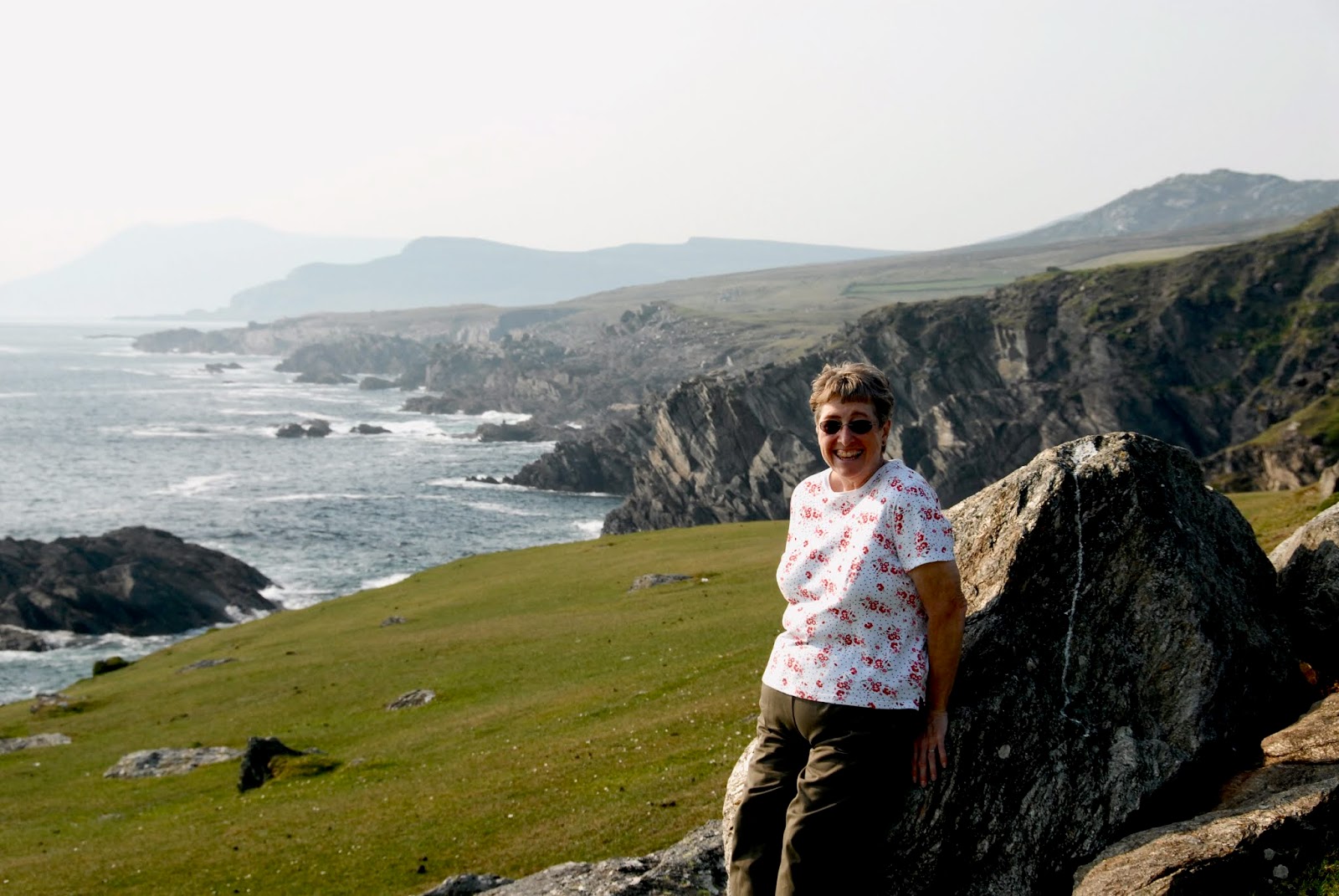
Anne on the west coast of Achill Island, Ireland's largest island.

One of many "castles in the middle of a field" in Ireland. No information about it available.

Killamery Cross and Church--we drove by, saw a sign on the wall of a pub, took a short walk, and this is what we found.

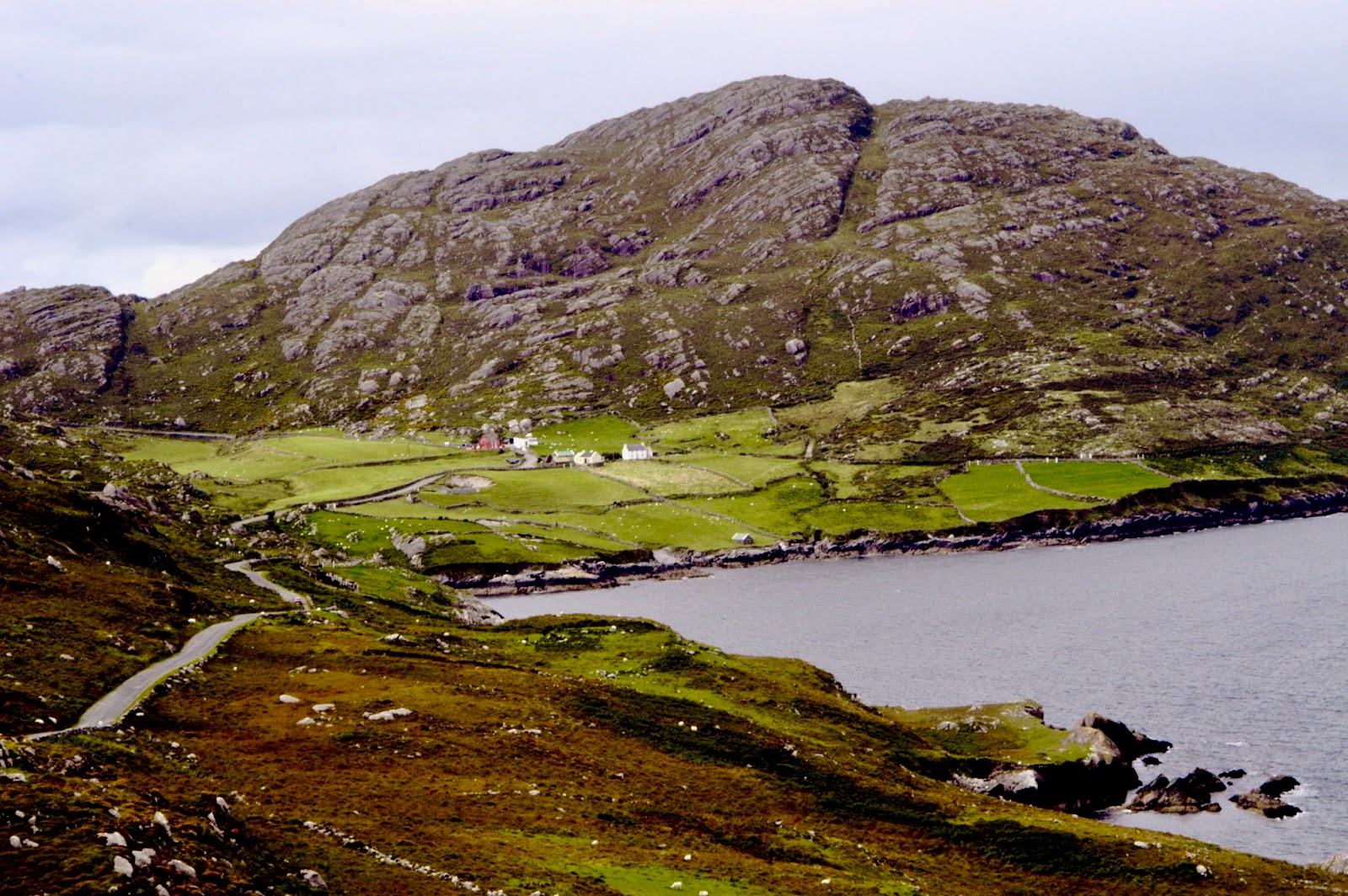
The road around the Ring of Kerry at Moll's Gap between Kenmare and Killarney.


Happy New Year, everyone! I’ll start this year with a couple of old stories. The Rambling Adventures of a Traveler and Golfer (2015) has sold out. I’ve pulled two stories out of that book from our trips to Ireland to share. Selecting stories from Ireland also forces me to search through old photo files of those trip—always a fun occupation—and even though the photos don’t directly relate to the stories, it’s fun to show a little bit of Ireland.


The Saturday congregation.

 Kells Celtic High Cross and Round Tower in Kilkenny County.  


Special Note about the Photos: Some of the photos are old and were probably converted from film or poor slides Often my early travel cameras were not the best. With post processing I’ve tried to make the photos at least presentable.
The colorful village of Sneem is on the south arm of the Ring of Kerry.

The Midleton Distillery (owned by Jameson) is now called the Jameson Midleton Experience and is a few miles east of Cork.

Anne was selected as one of the special tasters at the Bushmills Distillery in Northern Ireland. She earned her Master Taster's Award by liking the Bushmills Whiskey the best. In Ireland, like the US, whiskey is spelled with an "e"--in Scotland it's whisky, no "e."

Very typical Irish view of rock fences dividing fields. This is on the Dingle Peninsula.


Warning to Photographers: In the processes of trying to access old photos and slide shows saved on CDs, I’ve run into a couple of problems. First, some of my CDs with photos from the early 2000s have become corrupted and can’t be played—not all of them, but a few. Second, although my iMac has converted most of my slide show on discs to a usable format, some of the shows were saved on programs that my computer now can’t or won’t read, play, or convert. For the past few years I haven’t been using CDs to save photos, but since I’m not a fan of any cloud system, after backing up photos to an external hard drive I simply save all my original memory cards (they’ve become so cheap) in a fireproof safe. It was a wake-up call, though, to lose some of those old photo discs.
A local's pub in Ballyferriter, a very small village on the Dingle Peninsula.

Ua Flatbeartais (O'Flaherty's Pub) in Dingle--the IRA leaning is very evident in the decor.

Not far from Galway is the Quite Man Bridge, featured in the 1952 Academy Award winning (Best Director, John Ford) film which featured John Wayne, Maureen O'Hara, Victor McLaglin, among others. The film, although quite dated, is still worth a watch for the glimpse of old Ireland and the fantastic cinematography.  


On to the stories:
The road to the Cruit Island GC in the north of Co. Donegal.

A typically lovely major highway in Ireland.


Cliffs of Moher and the Stupid People

One of the prime natural tourist attractions in the Republic of Ireland is the Cliffs of Moher (Aillte an Mhorthair in Irish Gaelic). The cliffs are seven hundred foot sea cliffs above the Atlantic Ocean at Hag’s Head north of Lahinch in County Claire. The site draws more than a million visitors annually, and many of them are really, really stupid.
The only picture I have of the Cliffs of Moher; the rest are on an unopenable CD.

I’ll start with a couple of tourist notes about the cliffs before I get to the Stupid People. The best time of day to photograph the cliffs is in the late afternoon when the setting sun highlights both the rocks and the breathtaking crashing waves at their base. Late afternoon, after five PM, is also the best time for the budget minded to visit. Earlier in the day the tourist shop is open and there is a charge to visit the cliff’s lookout and to park. After five PM both are free. We were lucky enough to take advantage of both of these hints on our first visit to the cliffs. We drove out to the cliffs after a round of golf at Lahinch GC a few miles away. It had been squally all day, but the sun was out now and the wind was up significantly. We hiked up the trail to the cliff lookout for photos. It was then we saw the Stupid People.
The Poulnabrone Portal Tomb (a dolmen or megalithic tomb) in The Burren, an area of northwest Co. Claire southeast of Galway. The stark limestone area prompted Cromwell to say about The Burren, "There isn't a tree to hang a man, water to drown a man not soil to bury a man." 

"The Milestone" in front of one of our favorite Irish B&Bs (Milestone House in Dingle) is a path marker more than 4000 years old.

Peat (turf) drying--once dried it is used by many as fuel for heat and cooking.

Across from the observation area we could see a flat plateau on top of the nearest edge of the cliffs (which run in both directions for several miles). Although there were steel fences and massive signs warning of the dangers of the cliffs, a number of Stupid People (mostly teens and young adults of both sexes) were on top of the plateau. It was dumb enough that they were out on the rock with 30 to 40 mile per hour gusts and a drop of 700 feet a few feet away. But then the dumb showed they were dumber by crawling out to the edge and hanging a leg or arm or both over the edge. The really Stupid People would hang an arm and head over the edge and wave to their friends. One of the Stupid People’s hat flew off and the person made a jerking grab for it as it sailed down toward the sea. We thought for sure we were going to witness a tragic fall. No more! We headed back down the trail to our car and left the Stupid People to their madness. We figured that if anyone did fall that they probably weren’t meant to breed.
Don't let anyone tell you that Galway doesn't get crowded on weekends.

One of our favorite villages, Dingle, at night.

Sheep, dolmen, and croft--it's an Irish thing.

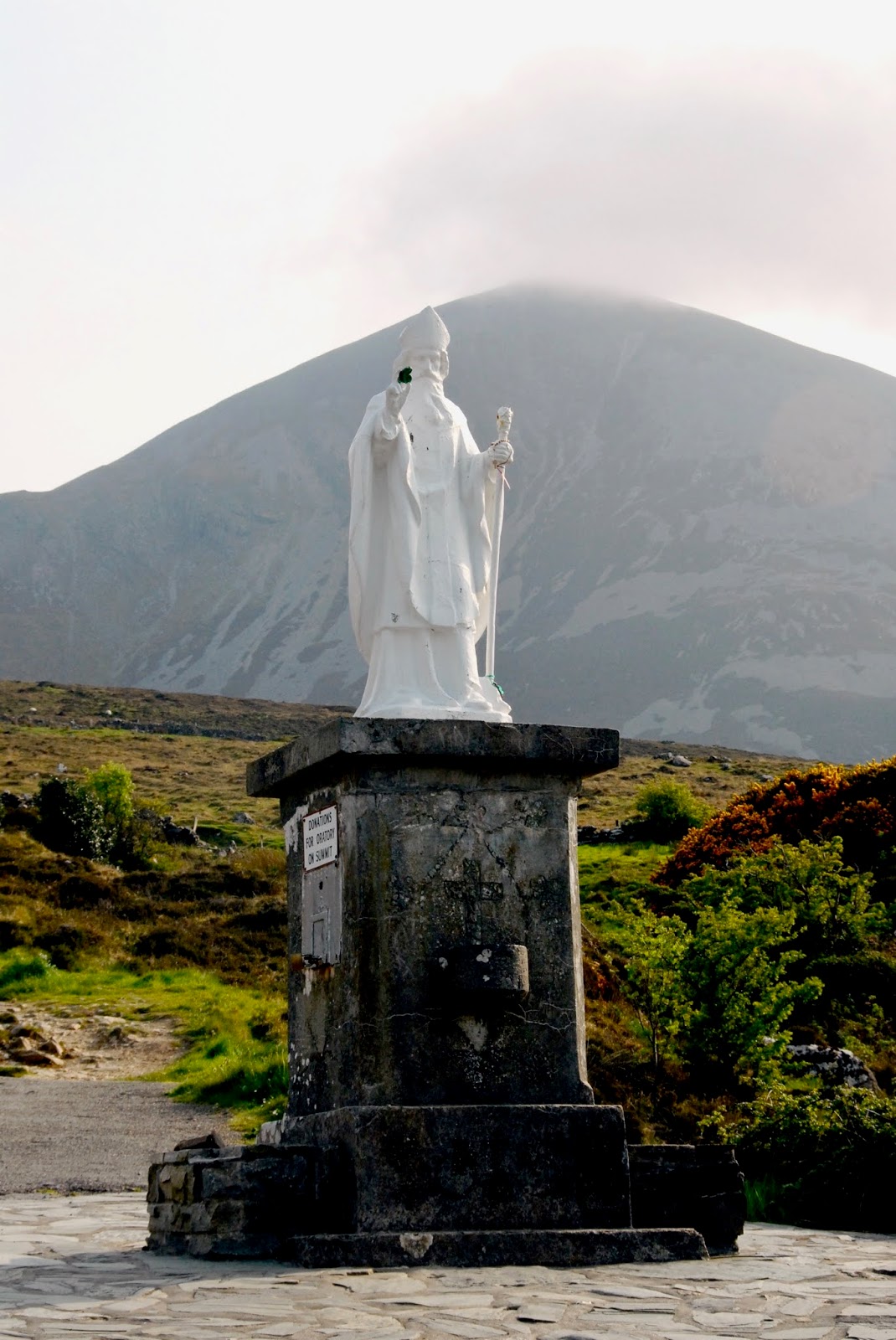
Statue of St Patrick with Croagh Patrick Mountain in the background.


A Mushy Bowl in Ireland

After a day out in Dublin we came back to the coastal village of Brae via DART (Dublin Area Rapid Transit) to find dinner. On the seafront we went into Jim Doyle and Sons Pub to check out the music scene. It was still early, about eight, and the music listed for nine  probably wouldn’t start until nine-thirty (the Irish would say half-nine) or ten. An item on the evening’s menu caught our attention—it was called a Mushy Bowl. After a few sips of our Guinnesses I went up to the bar and ordered two Mushy Bowls. In a few minutes (the Irish are faster with the food than they are with the music) our meals came. A Mushy Bowl is a large bowl of chips (thick fries) topped with onions, mushrooms, Irish bacon (more like Canadian bacon than our bacon which is known as streaky bacon), and covered with melted Irish cheddar cheese. Outrageously sinful and delicious and when the music started it was great as well. The group was very lively, except for one older gentleman (significantly older than us) sitting with his small drum and a glass of Guinness under a “Reserved for Musicians” sign. His glasses down on his nose, his baseball cap askew, he appeared to be soundly asleep when he wasn’t playing. One sign of life was that occasionally he’d sit up and sip his Guinness. After some session tunes we still had to take a walk on the promenade to work off some of the Mushy Bowl before returning to our B&B.
With intersections like this in Doolin how can people say they get lost in Ireland.


Anne can tell you that shopping is great in Ireland.

We have since found out that a Mushy Bowl is the Irish variant of the Canadian poutine (French fries, meat, cheese curds, covered with gravy). At home we’ve made our version of a Mushy Bowl several times—it’s wonderfully adaptable to whatever you have on hand.
A par 3 hole on Westport GC with Croagh Patrick as a backdrop.

Here I am taking a rest at the Giant's Causeway in Northern Ireland.

Pub Sessions are easy to find in most villages in Ireland.

Newgrange (Si an Bhru) is a Neolithic passage burial tomb build about 3200 BC. The one acre tomb is only about an hour out of Dublin in Co. Meath.

"Lizzie" was brought home on our first trip to Ireland in 2002. She now has a herd of 20 to 30 other darlings from our trips to hang out with.


NEXT: A surprise--it will be a surprise to me as well since I haven't figured out what's next..


Tuesday, June 21, 2016

Scotland Spring 2016 #4: Back on the Mainland


After an uneventful ferry crossing from Stromness on Orkney to Scrabster by Thurso on the Scottish mainland, we faced a long drive to our lodging for the next week—Scandinavian Village, Aviemore in Cairngorm National Park.  Our first break in the drive came via an eight mile detour from our main route to visit Grey Cairns of Camster (aka Camster Chambere  Cairns). 

These are neolithic tombs or passage tombs built between 5000 and 6000 years ago—they are among the oldest buildings in Scotland.  The site is a set of two cairns; one called Camster Long and the other called Camster Round.  

The Long tomb is about 200 feet long with two burial chambers and two passage entrances—at one time they may have been separate cairns which have been combined for some reason unknown.  The two tombs are each about 15 feet tall and are about 50 feet apart.  If you have a torch (flashlight) the tombs are accessible, 


but it’s almost a crawl and is definitely more fitting for younger more agile explorers.  The other tomb, 
The Round Cairn

Camster Round, is a single cairn about 60 feet in diameter and 12 feet tall.  You approach both the cairns, which are in the care of Historic Scotland, by a wooden path over the moor.  An interesting and photogenic stop.
After a stop for a quick bite of lunch and a walk around the small harbour at Lobster, 

we checked into our digs for the week, Scandinavian Villege Unit #1, a two bedroom villa unit (villas have the bedrooms upstairs).  


This is a timeshare unit we exchange into on more than half our trips to Scotland; it’s become our second Scottish home after Merlindale B&B in Crieff.  
The view from our unit.

The mountain village of Aviemore, a base for hikers-climbers-skiers, is centrally located in the Highlands.  From here we can get to the North Sea coast in an hour, 
Hopman Harbour

have easy access to the Whisky Trail (more than twenty open distilleries are within an hour and a half), have numerous castles available for touring (including Brodie, Cawdor, and Ballindalloch),  
Loch an Eileen Castle

and have plenty of historic tourist attractions nearby (Culloden, Clava Cairns, Highland Wildlife Park, Cairngorm Mountain Funicular, and Strathspey Steam Railway).  And most importantly, it’s perfect for reaching some outstanding Scottish golf courses—Royal Dornoch, Nairn, Tain, Boat of Garten, Granton-on-Spey, Moray Old and New, and a couple of dozen more.
Relaxing on our patio with computer, whisky, and crisps.
   
One of the interesting villages nearby is Cromarty on the tip of the Black Isle, 
On the Black Isle--rape seed fields and oil rigs.

a peninsula with water on three sides and separated from the mainland on the forth side by rivers.  The name (in Gaelic t-Eilean Dubh) most probably refers to the black soil of the rich farmland of the peninsula. Cromarty is a small seaport at the mouth of the Cromarty Firth.
Looks like the fishing wasn't so good this day.

It used to be a ferry terminal for the smallest commercial sea ferry in the UK—the ferry to Nigg—and a fairly major fishing port.  
The small Cromarty harbour and oil rigs.

Now it’s known for its work on building and repairing off shore oil rigs.  


For us, Cromarty is a quaint harbour and beach with some nice shops and plenty of photo opportunities, including the local lighthouse.   
One of the highlights of our stay in Aviemore this trip was a visit to the Cairngorm Reindeer herd.  

The herd is Britain’s only free-ranging reindeer herd.  Records indicate that reindeer along with red deer were hunted in the 1200s, but reindeer were extinct in the UK by the 1900s.  Mike Utsi and his wife Dr. Ethel Lindgren co-founded the present herd, importing seven individuals from Sweden in 1952.  The present herd, ranging in two areas of the Cairngorms, is made up of 150 deer (all named).  The current managers, Mr. and Mrs Allan Smith, took over the herd in the 1980s and maintain the herd with a small but efficient staff of herders and volunteers.  Hill trips to the herd leave the Reindeer Centre at 11:00 year round.  First, is a one mile drive to a specific parking area, 


followed by a guided 20-30 minute hike (not too strenuous) up to the herd. On the tour, we met about thirty deer who gathered round to get fed by the guide, Abby, 

and then hand-fed by members of the tour (about thirty of us).  


The deer know there's going to be food.

The deer are not really pets and don’t care for much handling, but they are sort of friendly and some were interested in us, though mostly they were interested in the food.  
Abby spread out some grain to attract the deer.

Anne is hand feeding a yearling some special grain.

One of the interesting facts we learned was that reindeer and caribou are the same species.  The Reindeer Centre maintains and enlightening Blog at www.cairngormreindeer.wordpress.com.  Anne and I thoroughly enjoyed our hike and our visit with the herd.  The next story, from The Rambling Adventures of A Traveler and Golfer (2014), also relates to the reindeer:

They Do Exist.  Ailsa, our adopted Scottish niece (daughter of our B&B hosts), spent three days with her schoolmates at an outdoor camp near Aviemore in the Highlands.  She was only thirteen and this was a big adventure—camping out, cooking out, special wildlife experiences.  She returned exhausted, starving for her favorite foods, and angry.  Exhausted we understood when we heard all that she had done.  Starving was also understandable, after all she had had to cook for herself on a campfire.  But the anger surprised us.  After a shower and at dinner she said, “We saw reindeer at the reindeer farm, and they were real.  

I felt so stupid.  I thought they were just made up in the stories.  Nobody ever told me they were real!”  It took several minutes for all of us to stop laughing.

River Luinaeg in the Cairngorms--on our way down from the reindeer herd.


Next: Some great golf on this spring trip.