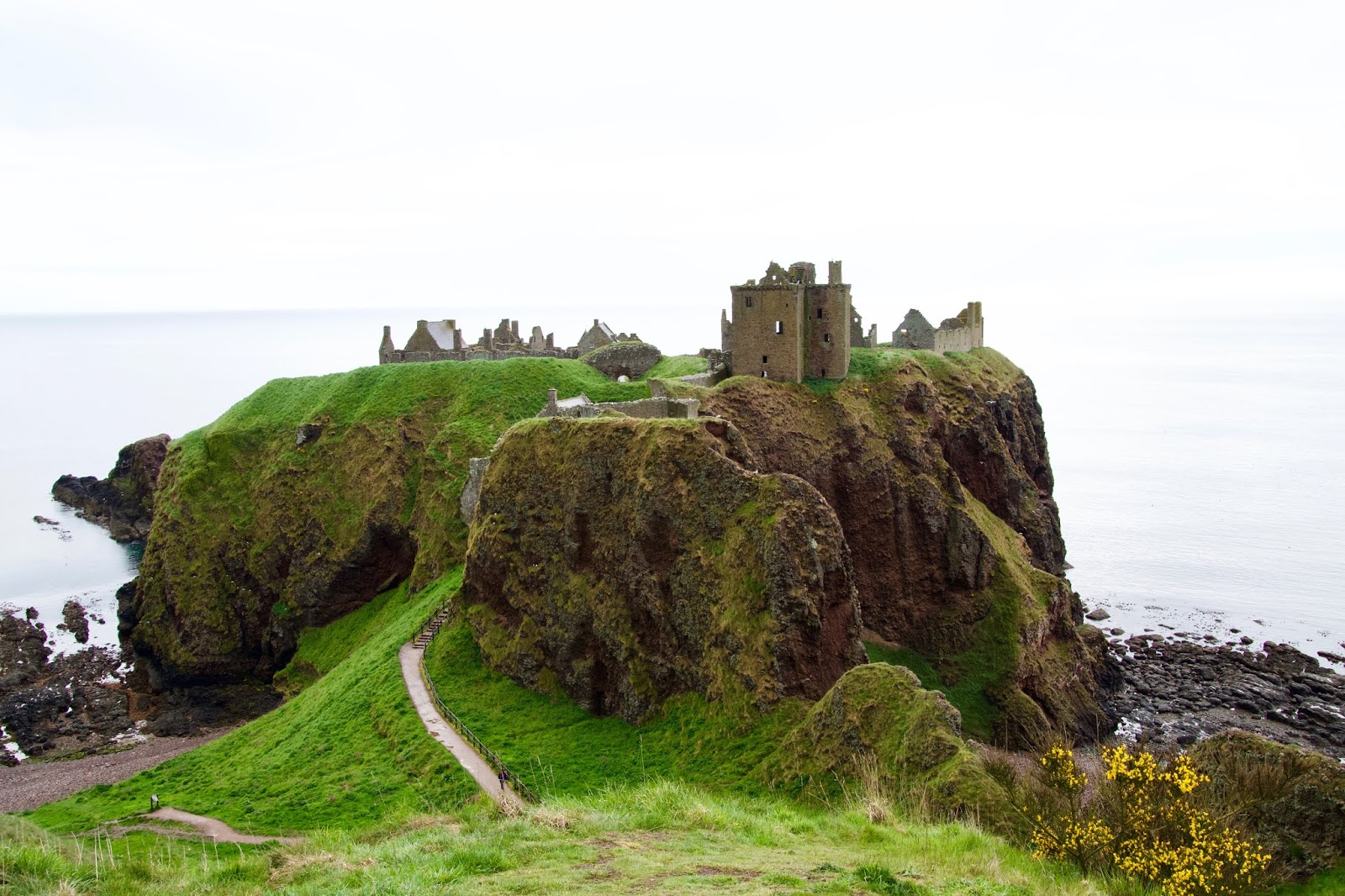
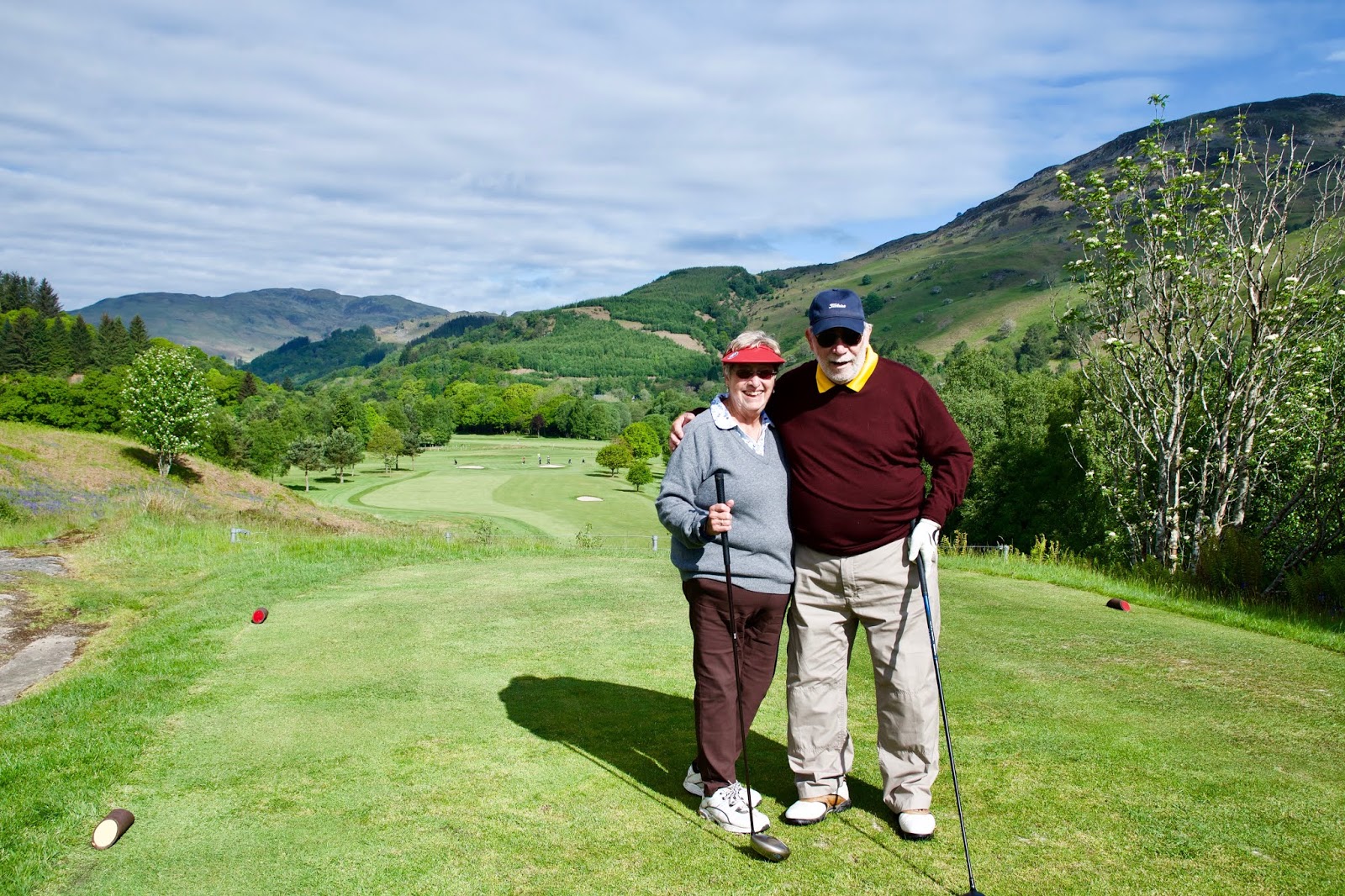
This post has four components: The first is a set of six photos that currently hang in our living/dining room; next, photos from a recent visit to the Oregon Gardens in Silverton; third, is a story from my personal early memories journal; and last, a couple of stories from my travel stories book which sort of fit with the first story. I hope you enjoy some or all of this post.
What's on Our Wall at Home
 |
| Kootanay National Park, Canada |
 |
| Crail Harbour, East Neuk of Fife, Scottand |
 |
| Salt Creek, Death Valley, California |
 |
| Clouds, Balnakeil Bay, Durness, Scotland |
 |
| Old Man of Storr, Isle of Skye, Scotland |
 |
| Packhorse Bridge (17th C), Carrbridge, Highlands, Scotland |
Ghosts and Superstitions.
My mom’s mother (Hispanic and Native American), my Nona, was who I spent a great deal of my growing up years with. When I was very young she was my babysitter when my folks went out. As I got older I would go to Nona’s before and after school. Friday nights when I was 8 or 10 would be spent with Mike who lived across the street from Nona. We would set up in front of the TV and the three of us would gorge out on treats and candy until Gramps got home from bowling.
While I was quite young, three or four, I had two supernatural experiences with Nona. One that I remember vividly happened while I was in bed at Nona’s house waiting for my parents to pick me up. In the threshold of the door to my room a huge menacing apparition raised up and I screamed. Most likely a vivid nightmare. The other was an apparition Nona saw as well—or she thought she saw and influenced me. We were going through the cemetery next to Nona’s house when something came out from behind a gravestone and scared Nona enough that she ran home pushing me in a stroller. I don’t really have any image of the thing in my mind, but I know I was scared too. In both cases something real or imagined made enough of an impression on me to last more than 70 years.
Nona had a couple of interesting superstitions that also made enough of an impression to last all these years. I’m not normally a superstitious person (even though I always keep two balls in my pocket while playing golf and never mark my ball on a green with a coin), but I will never put a hat on the bed. Nona taught me it was bad luck—I have no reason to believe it, but I will never do it. The other also has no reason that I know of, but Nona told me to never let three people make a bed. There may have been other superstitions, but those two I remember the strongest.
 |
| Many of the Oregon Garden plants showed from mild to severe damage caused by this summer's 115 degree heat. |
The Spirits of the B&Bs
In Peebles, Scotland, at the first B&B we ever stayed in, Anne had some strange dreams. She woke up as if she had been in pain or as if she were hurt. This happened several times in the three visits we had to that B&B. Then at the B&B we call home in Crieff, she would wake again with a sense of pain although not as deep as in Peebles, and with a feeling of sadness. These feeling wouldn’t last long and were easily dismissed. It wasn’t until after several trips to Scotland that we began to understand a possible explanation of these apprehensions.
On one of our visits to Merlindale B&B in Crieff, owner John Clifford lent me a book about our other favorite B&B, Lindores in Peebles. The book was Leaves from the Life of a Country Doctor by Dr Clement Gunn. It tells the story of his career as a doctor in Peebles from the 1880s until he retired in 1933. Lindores was the house he built as his home and his doctor’s office or surgery—each doctor’s home would be like a small hospital where he would see outpatients and house patients too ill to go home. Each time we stayed in that B&B we stayed in the room that had been the surgery room. On another trip John told me the story of Merlindale which was from the 1950s to the 1980s a doctor’s home and surgery, though the serious patients would have been moved to hospital rather than let stay in the surgery.
Lindores was built in 1895 and occupied by Dr Gunn and his family on August 31 of that year. For 38 years it was the local surgery. When Dr Gunn retired, the village created a small garden area a few doors from Lindores dedicated to the doctor. A plaque still in place on the gate to the house reads:
And one day smoke will rise, and windows in the morn
Grow bright, through pass the founder to the tryst
Which all must keep — God grant his soul meet Christ!
—from a poem by Dr Clement Gunn
When the good doctor left, Lindores ceased to be surgery and became a family home. In the late 1980s Carl and Kathryn Lane bought the house and refurbished it into a pleasant B&B until 2005 when the Lanes sold it to a local hotel and it became a specialty lodging for conventioneers. In 2010 it was sold by the hotel and converted back into a B&B. I often wonder if any of the current guests have strange dreams.
Merlindale in Crieff, our Scottish B&B home, began as family dwelling in 1867 and wasn’t converted into a surgery until the 1950s. The doctor lived and worked in the house until it was sold in the mid-80s to a family who converted it into a B&B. The Cliffords bought the B&B, added several rooms, changed its name to Merlindale and opened for business in 1995. Today it is one of Perthshire’s best B&Bs and winner of several awards. In the Pink room there may be some special spirits besides the whisky John and Jacky serve to guests upon arrival.
A third B&B we’ve stayed in with a special medical history is Craigard House Hotel in Campbeltown far south on the Kintyre Peninsula. The house was built in 1882 by local whisky distiller William McKersie who vied with his brother to see who could build the finest house. Already you can begin to see the spirit connection. The house remained in the McKersie family until bought by the local Council for use as a maternity home from 1942 until 1973. The majority of local people born during those years were born in the house. Since being converted to a guest house hotel in the late 1990s, many “Babies of Craigard” and “Mothers of Craigard,” as well as several doctors and midwives, have signed in at the guest house. At least one marriage of children of Craigard has taken place in the house, with the newlyweds spending their wedding night in the room in which they were born. Now that’s the sprit!
Voices in the Wall
It was a lovely afternoon for watching the Lamlash Bay lap the shores of Isle Arran. After a great round of golf at Shiskine Golf and Tennis Club we had stopped at Arran Cheese and picked up a couple of rounds and some crisps (what we’d call crackers) for snacking. Back in our room at Lilybank B&B we had cut into one of the cheeses, broken out some crisps, poured two generous drams of Lochranza single malt whisky, and were sitting back enjoying the view of the bay and the Holy Isle. We were the only guests checked-in so far at the B&B, yet we heard voices. The closer we listened, the more the voices seemed to be coming from the wall in our room. Was it the whisky? Was our room haunted? The voices were indistinct, yet they were recognizable as voices. I walked over to the wall for a closer listen.
I couldn’t tell what they were saying or where exactly they were coming from, but they seemed to be repeating the same refrain. I went to our door and listened outside the room. No, the voices seemed to be just in the wall of our room. As I moved along the wall to try to pinpoint the voices the sound moved from the wall to my backpack which leaned against the wall.
It took me only a moment to find my mini voice recorder, the one I use for verbal notes as we play a golf course. Somehow it had turned on and was playing back the same sentence describing a hole from the previous day’s golf. Mystery solved, but it might have been a better story had it been a talking mouse in the wall or the spirit of a former guest who really didn’t want to leave the place or if we’d already had more whisky.
 |
| Duck on Tree Branch in the Shadows |
NEXT: Got any ideas for me?