Showing posts with label ghosts. Show all posts

Friday, August 6, 2021

Speaking of Spirits and Other Irrelevant Photos

This post has four components: The first is a set of six photos that currently hang in our  living/dining room; next, photos from a recent visit to the Oregon Gardens in Silverton; third, is a story from my personal early memories journal; and last, a couple of stories from my travel stories book which sort of fit with the first story. I hope you enjoy some or all of this post.


What's on Our Wall at Home


Kootanay National Park, Canada

Crail Harbour, East Neuk of Fife, Scottand

Salt Creek, Death Valley, California

Clouds, Balnakeil Bay, Durness, Scotland

Old Man of Storr, Isle of Skye, Scotland

Packhorse Bridge (17th C), Carrbridge, Highlands, Scotland


Ghosts and Superstitions. 


My mom’s mother (Hispanic and Native American), my Nona, was who I spent a great deal of my growing up years with. When I was very young she was my babysitter when my folks went out. As I got older I would go to Nona’s before and after school. Friday nights when I was 8 or 10 would be spent with Mike who lived across the street from Nona. We would set up in front of the TV and the three of us would gorge out on treats and candy until Gramps got home from bowling.

While I was quite young, three or four, I had two supernatural experiences with Nona. One that I remember vividly happened while I was in bed at Nona’s house waiting for my parents to pick me up. In the threshold of the door to my room a huge menacing apparition raised up and I screamed. Most likely a vivid nightmare. The other was an apparition Nona saw as well—or she thought she saw and influenced me. We were going through the cemetery next to Nona’s house when something came out from behind a gravestone and scared Nona enough that she ran home pushing me in a stroller. I don’t really have any image of the thing in my mind, but I know I was scared too. In both cases something real or imagined made enough of an impression on me to last more than 70 years.

Nona had a couple of interesting superstitions that also made enough of an impression to last all these years. I’m not normally a superstitious person (even though I always keep two balls in my pocket while playing golf and never mark my ball on a green with a coin), but I will never put a hat on the bed. Nona taught me it was bad luck—I have no reason to believe it, but I will never do it. The other also has no reason that I know of, but Nona told me to never let three people make a bed. There may have been other superstitions, but those two I remember the strongest.   


Many of the Oregon Garden plants showed from mild to severe damage caused by this summer's 115 degree heat.


The Spirits of the B&Bs


In Peebles, Scotland, at the first B&B we ever stayed in, Anne had some strange dreams. She woke up as if she had been in pain or as if she were hurt. This happened several times in the three visits we had to that B&B. Then at the B&B we call home in Crieff, she would wake again with a sense of pain although not as deep as in Peebles, and with a feeling of sadness. These feeling wouldn’t last long and were easily dismissed. It wasn’t until after several trips to Scotland that we began to understand a possible explanation of these apprehensions.

On one of our visits to Merlindale B&B in Crieff, owner John Clifford lent me a book about our other favorite B&B, Lindores in Peebles. The book was Leaves from the Life of a Country Doctor by Dr Clement Gunn. It tells the story of his career as a doctor in Peebles from the 1880s until he retired in 1933. Lindores was the house he built as his home and his doctor’s office or surgery—each doctor’s home would be like a small hospital where he would see outpatients and house patients too ill to go home. Each time we stayed in that B&B we stayed in the room that had been the surgery room. On another trip John told me the story of Merlindale which was from the 1950s to the 1980s a doctor’s home and surgery, though the serious patients would have been moved to hospital rather than let stay in the surgery. 

Lindores was built in 1895 and occupied by Dr Gunn and his family on August 31 of that year. For 38 years it was the local surgery. When Dr Gunn retired, the village created a small garden area a few doors from Lindores dedicated to the doctor. A plaque still in place on the gate to the house reads:

And one day smoke will rise, and windows in the morn

Grow bright, through pass the founder to the tryst

Which all must keep — God grant his soul meet Christ!

—from a poem by Dr Clement Gunn


When the good doctor left, Lindores ceased to be surgery and became a family home. In the late 1980s Carl and Kathryn Lane bought the house and refurbished it into a pleasant B&B until 2005 when the Lanes sold it to a local hotel and it became a specialty lodging for conventioneers. In 2010 it was sold by the hotel and converted back into a B&B. I often wonder if any of the current guests have strange dreams. 

Merlindale in Crieff, our Scottish B&B home, began as family dwelling in 1867 and wasn’t converted into a surgery until the 1950s. The doctor lived and worked in the house until it was sold in the mid-80s to a family who converted it into a B&B. The Cliffords bought the B&B, added several rooms, changed its name to Merlindale and opened for business in 1995. Today it is one of Perthshire’s best B&Bs and winner of several awards. In the Pink room there may be some special spirits besides the whisky John and Jacky serve to guests upon arrival.

A third B&B we’ve stayed in with a special medical history is Craigard House Hotel in Campbeltown far south on the Kintyre Peninsula. The house was built in 1882 by local whisky distiller William McKersie who vied with his brother to see who could build the finest house. Already you can begin to see the spirit connection. The house remained in the McKersie family until bought by the local Council for use as a maternity home from 1942 until 1973. The majority of local people born during those years were born in the house. Since being converted to a guest house hotel in the late 1990s, many “Babies of Craigard” and “Mothers of Craigard,” as well as several doctors and midwives, have signed in at the guest house. At least one marriage of children of Craigard has taken place in the house, with the newlyweds spending their wedding night in the room in which they were born. Now that’s the sprit!


Voices in the Wall


It was a lovely afternoon for watching the Lamlash Bay lap the shores of Isle Arran. After a great round of golf at Shiskine Golf and Tennis Club we had stopped at Arran Cheese and picked up a couple of rounds and some crisps (what we’d call crackers) for snacking. Back in our room at Lilybank B&B we had cut into one of the cheeses, broken out some crisps, poured two generous drams of Lochranza single malt whisky, and were sitting back enjoying the view of the bay and the Holy Isle. We were the only guests checked-in so far at the B&B, yet we heard voices. The closer we listened, the more the voices seemed to be coming from the wall in our room. Was it the whisky? Was our room haunted? The voices were indistinct, yet they were recognizable as voices. I walked over to the wall for a closer listen.

I couldn’t tell what they were saying or where exactly they were coming from, but they seemed to be repeating the same refrain. I went to our door and listened outside the room. No, the voices seemed to be just in the wall of our room. As I moved along the wall to try to pinpoint the voices the sound moved from the wall to my backpack which leaned against the wall. 

It took me only a moment to find my mini voice recorder, the one I use  for verbal notes as we play a golf course. Somehow it had turned on and was playing back the same sentence describing a hole from the previous day’s golf. Mystery solved, but it might have been a better story had it been a talking mouse in the wall or the spirit of a former guest who really didn’t want to leave the place or if we’d already had more whisky.


Duck on Tree Branch in the Shadows


NEXT: Got any ideas for me?


Saturday, July 17, 2021

Old Travel, Wales 2007, Part 2


Beaumaris Castle, Anglesey

Carreg Cennen Castle, Llandielo, south Wales


Three Special Pubs. Many of the pubs we visit (like coffee shops in the states) are local hangouts, and many have something special about them. Near Pwllheli GC we found two of these special pubs. The first was a modern gastro pub, where the food is more important than the drink, named Y Brycynan and owned by Dennis Moore who was also the Managing Secretary of Pwllheli GC. 


The modern pub is a lively place which serves high quality meals for good prices--for example, scampi and fried potatoes, lamb shank. It’s a Must Stop in the area. Also interesting is the name which is old Welsh for…nobody seems to know. Dennis said it came with the pub and the former owners couldn’t translate it either. Tradition is important in Wales, so the name stayed the same. 

The second special pub is the The Ty Coch Inn in the village of Porth Dinllaean which is the smallest official village in Wales and is located in the middle of Nefyn and District GC. 


Take the path from the headland golf course, accessible from the twelfth or fifteenth tees, 100 yard down to the beach and the village which consists of a couple of houses and the Ty Coch Inn. After a drink or a meal, climb back up to the course and continue your round, A fantastic idea!

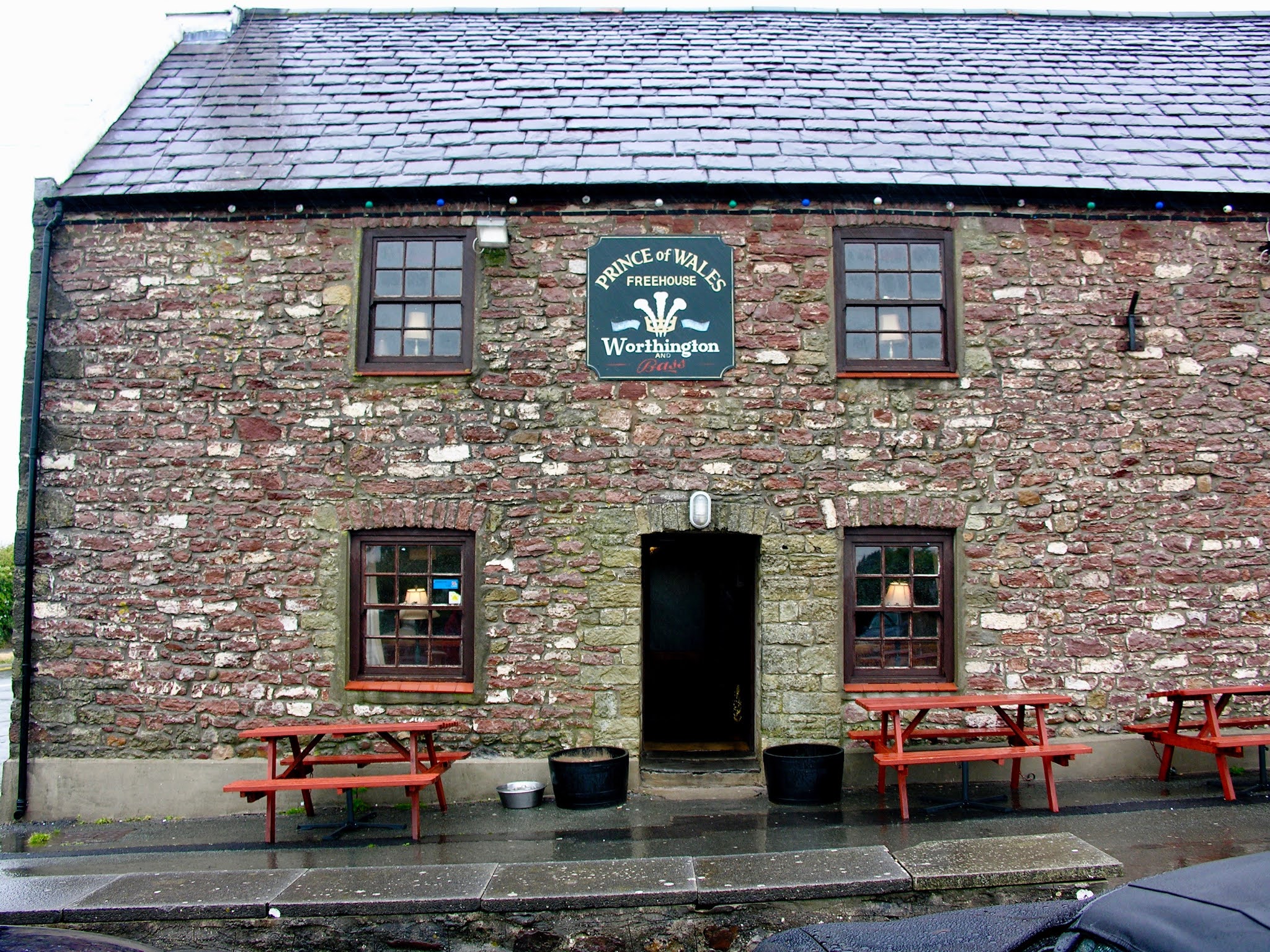
A third special pub on the trip was the Prince of Wales Inn on the outskirts of the village of Kenfig recommended to us by the golf pro at Pyle and Kenfig GC. After golf at P&K (as the locals call it), we dropped in to the Prince of Wales for quick pint (or in our case, a quick half). The pub’s stone exterior is very plain and the interior was fairly nondescript. What attracted our attention were the locals—living and dead. The pub dates back to the 15th century and has been a guild hall, courtroom, coroner’s inquest room, Sunday school room, and a mortuary for shipwrecked sailors. With this history it’s obvious why the inn is considered one of the most haunted in Britain. While we didn’t meet any of the local spirits (except the ones in our glass), we did observe an interesting local.


Our second visit to the Prince and the old guy is alone.


The older gentleman was “holding court” with his chums when a young girl (probably a granddaughter) came in and told him it was time to go home to dinner. He told her he’d be along as soon as he finished his story. She said, “You’d better hurry, Mum is getting angry!” His buddies chuckled as the story ended abruptly and the man left. We liked the pub so much we went back the next night for dinner. The same local was sitting on the same stool, but he was alone. When his granddaughter came in to gather him for dinner, he immediately left with her. Even though we stayed longer and looked harder the second night we still saw no ghosts. I wouldn’t doubt though that many of the bar stools are occupied with the spirits of locals waiting to be called home.

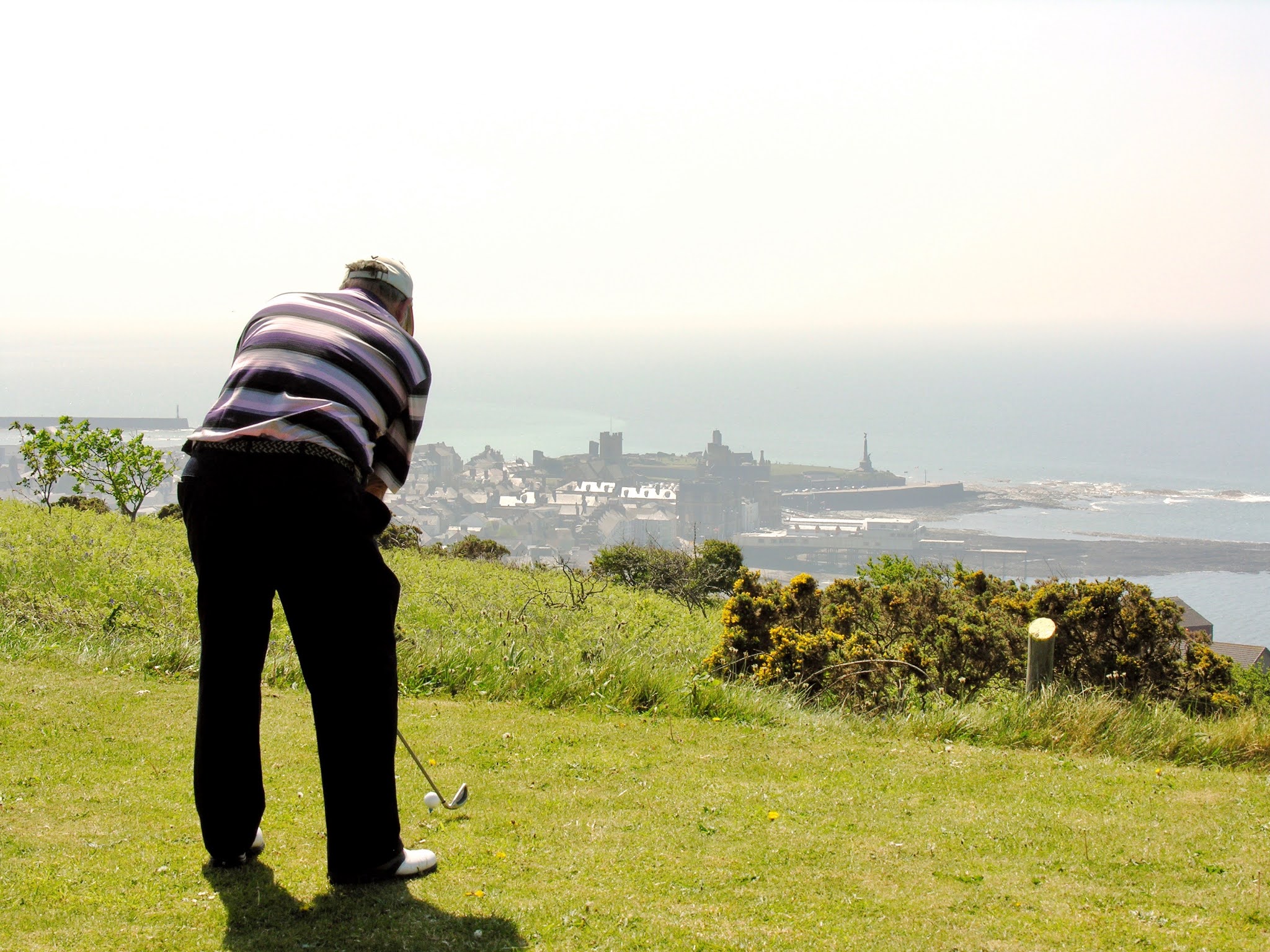
Two views of Aberystwyth from the local golf course.


No golf at Borth GC. It happened in Ireland at a course in Galway, and now it has happened in Wales. We arrived at Borth GC just south of Machynllth village along the west coast of Cardigan Bay just ahead of our scheduled tee time.  The lady in the golf shop had us on the tee sheet, but said we owed for green fees. This is not unusual and we always keep a copy of our arrangements with the course manager. I told the lady we were writing about the course and golf was complimentary. She said, “Yes, but it doesn’t say free.” I asked her to talk to the secretary who had made the arrangements and she did. The secretary came out and said she hadn’t intended to give us free golf, but how about half price. At this point we walked out. It costs the club nothing to put two people out the course for a round, and if a course is up front about not giving us “courtesy of the course” we will often decide to pay and play anyway. I draw the line, though, when a course reneges on its promise. We spent our found time doing some great touring in Wales [see next story].

The Aberystwyth funicular tram to the overlook and golf course.


Devil’s Bridge. The Devil’s Bridge is an interesting site we would have missed had not Borth GC turned us away. It’s where three bridges have been built, one over another, over a gorge. 


We walked down to the bottom of the gorge and could view all three bridges stacked up (for a small fee). We then hiked back up to the top in time to see a steam train coming into the small station near the bridge. We later recognize the bridge in the mystery TV series Hinterland. We missed golf in Borth, but made good use of our extra  time.

Laugharne Castle


Two Boathouses of Laugharne. Besides the Laugharne Castle, the village hosts two Boathouses, both quite interesting. The first and most known Boathouse in Laugharne is the site of poet Dylan Thomas’ (1914-1953) writing shed overlooking the Taf estuary. 

The coastal path with view of Dylan Thomas' Boathouse.


Thomas' Writing Shed


The boathouse is now a tearoom on the new Wales Coastal Path. The small writing shed, where Thomas did much of his later writing, is above the tearoom and has views of the estuary and part of the village. The wring shed is open for viewing most of the year.

The other Boat House in Laugharne is a high standard luxury B&B. The B&B has a Dylan Thomas connection as well. In his time the building was a pub, The Corporate Arms, where Thomas often drank. The B&B we booked into was run by mother/daughter duo, 


Ann and Jenny. Outstanding rooms, lovely service, and delicious meals made it the best in the area. Now run by new owners (2017), the Boat House B&B has maintained its stellar reputation.

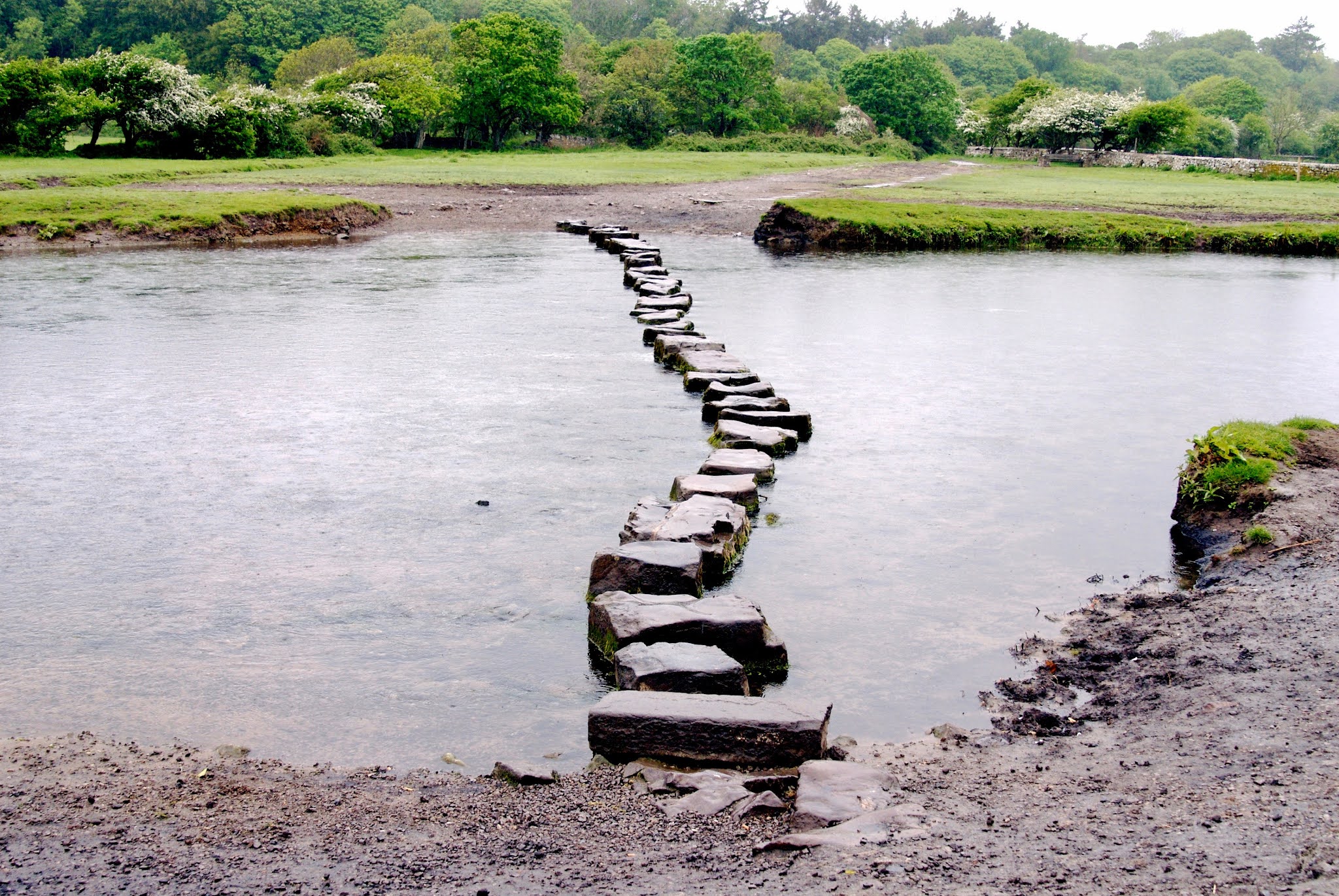
The path to Ogmore Castle and the castle.


The Welsh National Botanic Gardens. There are some wonderfully special gardens in Scotland and England. The small two acre Branklyn Garden in the city of Perth in is one of our GoTo stops on every trip to Scotland. Just outside of Crieff in central Scotland is Drummond Castle and Gardens with one of the most impressive formal gardens in the UK. Acorn Bank Gardens near Penrith in northern England is renowned for its herbal gardens and fruit orchards. The garden has a lovely tearoom serving specialties straight from the garden, such as hot bed lettuce soup which was delicious. And on this trip we were lucky to hear about and visit the Welsh National Botanic Gardens in Llanartheny in southern Wales. 


Only recently opened (May 2010), the gardens are made up of several great exhibits. The Walled Garden has several themed gardens including the Boulder Garden, the Apothecary Garden, the Welsh Native Garden, the Slate beds, and more. The outstanding feature of the entire garden is the world’s largest single-span great glasshouse, a dramatic facility as long as a football field and twice as wide. 


Housed in the glasshouse is a series of Mediterranean gardens. Besides the outstanding flowers and plants exhibited, there is a British Bird of Prey Centre with daily flying displays. We spent a couple of hours wandering amongst the exhibits and certainly could have spent more time if local golf hadn’t gotten in the way.

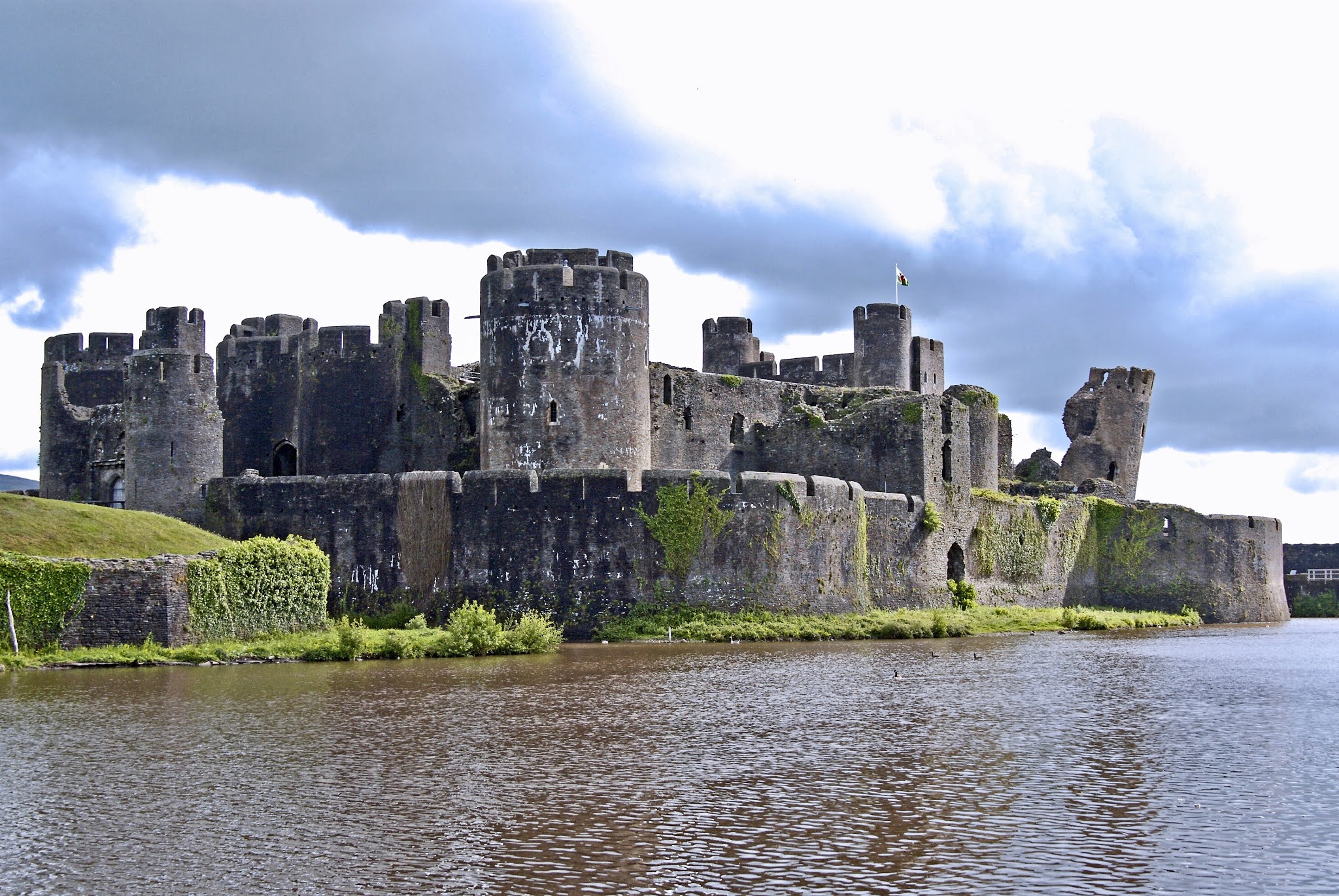
At Caerphilly Castle, southeast Wales

Views of Caerphilly Castle, Wales' Largest


Sunset at Aberystwyth


Monday, May 27, 2013

To the South, To England (Part 2)


I Ain’t ‘Fraid of No Ghosts.  Most of the tourist shops in southern England sold small books about local ghosts (ie., the Ghosts of Dartmoor, Southern Ghost Stories, etc.).  I also have a book I’d been reading at home before the trip called “Britain’s Most Haunted Pubs and Inns.”  This led me to start asking at the pubs and inns we visited if there were any local spooks.  
In Staple Fitzpaine near Taunton in Somerset we stayed at the Greyhound Inn which has been a coaching house and inn since the 1700s.  
Greyhound Inn, Staple Fitzpaine, Somerset

A great steak dinner
While visiting with the landlord I jokingly asked if there were any local ghosts we could visit with.  He said that while he’d never felt a presence, the kitchen staff say that sometimes they feel someone else is in the room with them when no one is about.  He also said that a burly Irishman had stayed one night a couple years before.  In the morning when he was asked how he’d slept, the Irishman replied, “I barely slept at all.  I woke up in the middle of the night with hands around my neck and no one was there.”  The landlord didn’t know if the Irishman had had a supernatural experience or just too many pints the night before.  
Our next opportunity came at The Dolphin Inn in Penzance, Cornwall.  

The Dolphin Inn

We picked out this pub because of its very nice menu and reputation for food, as well as its reputation as a quite haunted inn. At least three ghosts haunt the inn: the old retired ship’s captain, a young man who had committed suicide in the pub, and an elder lady who wanders amongst the upstairs rooms.  We had a pint one night and a meal the next and never did see any of the resident spirits except the ones in our pints of cider.
On our exploration of Dartmoor National Park in Devon we were told by a visitor’s centre docent to stop by the Warren House, the third highest inn in England.  
The Warren House, Third Highest Inn in England
It was quite foggy on the moor, very atmospheric, so the Warren House pub was a lovely stop with its welcoming fire (which has been going for almost 200 years).  The landlord here was very chatty and when I asked about ghosts he said he wasn’t sure if the inn was haunted or not.  
Landlord of the Warren House
 He then proceeded to tell us that there were certain places in the pub house that dogs wouldn’t set foot, that the kitchen staff had seen fleeting images outside the kitchen when no was there, and that a publican had once been murdered behind the bar, but he wasn’t convinced their spirits still roamed the house.  Even when we went back for dinner later in the day, we still didn’t find any evidence of ghosts, just friendly locals enjoying Sunday dinner.
Our last spooky place is considered the most haunted pub in England. The Red Lion in Avebury in Wiltshire is indeed special.  
Avebury Stone Circle
The inn is in the middle of the largest ancient stone circle in the world.  The Avebury circle, about 30 miles north of Stonehenge, is three-quarters of a mile around and consists of scores of very large stones.  

The Red Lion Pub has numerous eating areas as well as five resident ghosts.  The staff have also reported seeing a phantom horse drawn carriage pull into the inn at night and hearing the ghostly clattering of hooves in the courtyard outside the pub. 

Though Prince Charles has eaten several times in the pub, not even his presence had brought any of the spirits to seek a Royal audience.  
Although we weren’t successful in finding any evidence of real phantoms (now there’s an oxymoron for you), we did enjoyed the search for English ghosts.  

The Moors.  Our trip to the south shires of England took us through or around several of  the famed English moors--areas of grasslands, heathers, fern, and stone, usually quite desolate,foreboding, and very Hound of the Baskervillean, except that they were all full of walkers or trekkers.  Exmoor in Somerset and North Devon was disappointing.  It was mostly stonewall-fenced farmland hidden behind tall hedges (see the last blog post).  On the way from Penzance (Cornwall) to Tavistock (Devon) we got into more typical moorland on Bodmin Moor.  After quite a drive along the southern England coast it was pleasant, even in light rain, to walk a half mile out to Hurler’s stone circle, 

Hurlers' Stone Circle on Bodmin Moor

one of the more ancient of the Neolithic circles.  A much less strenuous 50 foot walk was needed to see Trethevy Quoit (aka. the Giant’s House) 

with its 12 foot long top stone, a form of burial chamber we’ve seen more in Ireland where they are called dolmens.  
It was Dartmoor though where we got the real moorland experience, complete with heavy fog and swirling mists.  
Anne walking in the moors

A Tor, a naturally sculpted rock outcropping in the moors

We drove from our rather forgetable Mallards B&B in Tavistock to the main Dartmoor National Park Visitors’ Centre in Princetown, where we got suggestions for what to see on our one day visit to the park.  First on the list was the Warren House, a great inn in the heart of the moors.  
The Warren House, Dartmoor
Then, after coffee, a flapjack (a sweet homemade oat biscuit), and some conversation, we stopped to see a clapper bridge (a stone bridge over a stream or river) in Postbridge.  

Luck was with us as we had the bridge to ourselves for a few minutes before a bus of tourists arrived to swarm the bridge and get into each others’ photos.  
Anne in one of the stone huts at Grimspound, Dartmoor

It was about three miles from Postbridge to the turnoff to the trailhead of the hike up to Grimspound, a low stonewall encircled Bronze Age settlement of 24 stone huts dating to 1300 BC.  For a break from the foggy moors we drove down a horrendously small road to the village of Buckfast and a visit to Buckfast Abbey, 


an active working monastery. 

In the abbey church I visited with Father Christopher who knew about the Mt Angel Abbey and the Benedictine Assisted Living Center where my mother is getting well cared for.  After the dry weather of the abbey we headed back into the moors to find either stone circles or remains of stone huts (I couldn’t be sure which) 

before again visiting Warren House for a good dinner.  One interesting note about dinner at the inn was that while in the morning the specials board had listed a special of Sunday roast, by mid-afternoon the roast had been replaced with a different special.  As we ate we watched the bar staff change the specials three more times--either they were one-of-a-kind or they were yesterday’s left-overs.  Lastly, we wanted to see a second ancient village with a unique stone row feature.  

We started out past the wild Dartmoor ponies, but soon were turned back by fog so thick we were afraid of getting lost on the trackless moor.
Although the villages of southern England, such as St Ives (made famous by the Doc Martin TV series) and Mousehole, 
Mousehole harbor, a few miles from Penzance, Cornwall

were picturesque, I much more enjoyed traipsing around Bodmin Moor and Dartmoor.

At the Theatre.  A Rick Steves’ travel show turned us on to the open-air Minack Theatre at Porthcumo about four miles from Land’s End in Cornwall.  We booked from home an evening  performance of a Cornish Celtic Folk Group at the theatre and were looking forward to the music and to seeing the venue.  When the weather on performance day turned nasty with 40 mile an hour winds and heavy rain, we decided to visit the theatre during the day knowing that the evening performance would be cancelled.  


The hand-built rock amphitheater is the dream child of Rowena Cade, who used her back garden to stage a local production of The Tempest in 1932.  Her work and that of a faithful gardener produced a dramatic seaside theatre which today hosts 17 plays in a season running from June through September and seen by 80,000 theatre-goers in a typical year.  


As we toured the theatre in high wind and driving rain we were told that the performance would probably not be cancelled--evidently the group would perform for anyone silly enough to sit out on grass or stone seats in 40 degree wind-blown rain.  We were not in attendance, but the theatre is still a highlight of our trip.  


Next: More highlights from England and Scotland and our trip summary--all written from home.