Showing posts with label Chaco Canyon. Show all posts

Thursday, March 28, 2024

#213 Doors and Windows

#213 Doors and Windows


Where do I get my ideas for a blog? Some are original with me, but I must admit that I’m guilty of stealing topics. Whenever I do I like to give credit to the real source—it assuages my guilt to an extent. Thus the topic for this photo retrospective. In a blog by Taos photographer/author/photo-tour guide Geraint Smith (www.geraintsmith.com) I was attracted to several of his photos of local Southwest doors. After viewing some of Geraint’s shots I looked at my files and decided I had enough photos of doors and windows to make an interesting post.

Doors and windows bring up the subjects of entrances, exits, and view into all manner of life experiences. I selected the photos I want to share and let them organize themselves into common themes. I’ll keep my commentary simple and let the doors open and close and the views be as narrow or far reaching as they will be.


Closed Doors. It’s often said that when one door closes another one opens. That may be true, but some closed doors do open up many questions.

Glencoe Village, Scotland: Is the face on this bricked up door inviting or off-putting?

Scotland: Where did this door lead and why was it closed off?


In the Window. From the outside we see what’s in the window or what’s on the other side. Either or both views can be interesting.

Spittel of Glenshee, Scotland: The Old Manse

Muthill, Scotland: Pooh in the Window


The Shambles, York, England: I ponder the watches in the window.


Acorn Bank Gardens, England: Is the story of the photo us looking in at the gentlemen in the tearoom or of him looking out?

Edinburgh, Scotland: Where the girls are.

Sellwood district, Portland: A Window of Windows


Through the Door. “Close some doors today. Not because of pride, incapacity or arrogance, but simply because they lead nowhere.” [Paulo Coelho, Brazilian novelist] Let’s see where these doors lead.


St Andrews Cathedral, Scotland: From the front to the back.

An Oxford door leading to bikes.

Fort Stevens, Oregon: Multiple doors or just one?

Sweetheart Abbey, southern Scotland: One door leading to many others.

Duunottar Castle, Scotland: Enter a tunnel and emerge seven centuries earlier.

Tintagel castle, Cornwall, England: Step out of the doorway into the view King Arthur saw. Supposedly.
 Anne was so excited about being in the castle that she phoned her sister in Oregon--at 2:30 AM.
Bonito Pueblo, Chaco Canyon, New Mexico: Historic 10th C Doorways


Out the Window. “Two men look out a window. One sees mud, the other sees the stars.” [Oscar Wilde, playwright] Looking through these windows what would we see?

Lake District, England: The view of her garden that Beatrix Potter enjoyed as she wrote.

Falkland Palace, Scotland: The guide said we couldn't take photos inside the castle, but she did let me take a picture of the outside from inside.

Stonehaven, Scotland: A view of the harbour from inside our B&B bedroom.

Sunlight transformed by stained glass windows of a church. I'd tell you the name of the Scottish church but my notes are already packed for the move to our new home in Canby. The move is coming soon.


Decorated Doors. In Ireland, locals were required to paint the doors to their houses black in remembrance upon the death of Queen Victoria. In diference, the Irish painted their doors every color of the rainbow—black is not a color of the rainbow. Anne and I liked the look of the Irish doors we saw on our first trip to Ireland. We came home and painted our front door red and back door blue.

Cathedral in Cork, Ireland: Doorway decor over the top. Literally.

Papermill, Oregon City: The decoration on the door tells the status of the mill.

Santa Fe, New Mexico: A very understated decorated door in Santa Fe.

Falkland, Scotland: The door lintel notes the marriage of RMK to MM in 1743.

I'm not certain of the meaning of decorations above this Arizona church door, but it is defintely grim.

Look carefully at the detailed small images decorating the wall above this doorway in a small Scottish church. Much to imagine.

Smoke Shop Wall and Door, Sant Fe


Decorated Windows. Most of the decorations for windows will be holiday decor or what’s just on the inside, We did find an example of note of window decoration in Santa Fe.


Reflections. “There’s a world out there. Open a window and it’s there.” [Robin Williams, actor and comedian] The same could be said for looking at the reflection in a window—look, a world in the image.

The world of a small Scottish country road reflected in cottage window.

What did you see first in the York store window--sewing machines or the reflected building across the street?

The sign on this Santa Fe door invites you into the reflection.


Just for Fun. It’s knot a door and knot a window. 


NEXT: I'll see if I can find another interesting world to visit.


Sunday, April 7, 2019

Spring in the Southwest, Part 1

A City Different

Our spring trip to the Southwest had much in common with previous trips and much that was different. This and the next post will highlight some of the sames and differences. 
I’ll start with the City Different, Santa Fe, New Mexico. 
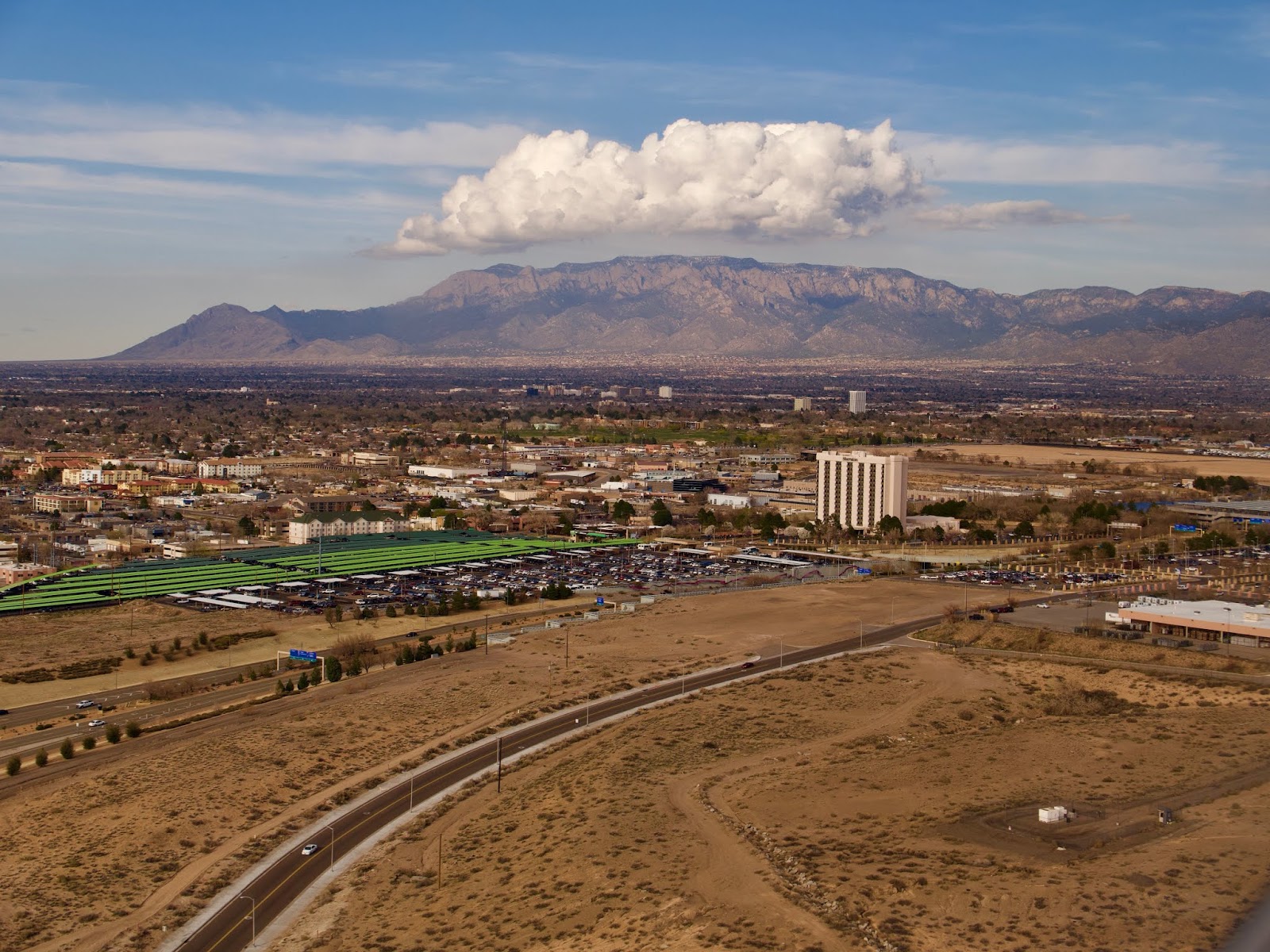
Landing in Albuquerque, NM.

We flew into Albuquerque on a late flight from Portland (our earlier flight had been cancelled), picked up our rental Nissan Sentra, and drove to Santa Fe and our 8-day digs at the Santa Fe Worldmark (timeshare). 
Ou timeshare unit at Worldmark Santa Fe.


Our one bedroom unit near the city center made a sweet base for exploring the Santa Fe area. For three years starting in the early 90s I taught a debate summer camp for students from across the country at the College of Santa Fe (now an art school) and we fell in love with the southwest (other years I taught in Albuquerque, Durango, and Flagstaff). 
Santa Fe


Santa Fe (population 68,000, elevation 7,000’) was founded in 1610 as a province of New Spain and was originally (or oringely) settled by the Tanoan people around the Santa Fe River—at the time it had year-round flow, but now it has water only seasonally. Santa Fe became a part of US when New Mexico was admitted to the Union in 1912, with Santa Fe as the capital. 
The oldest church in the US.

The oldest house in the US (exterior and interior).


The moniker “A City Different” probably comes from its tradition began in 1912 of only allowing Spanish-Pueblo Revival building-style. These building restrictions (reinforced in 1930 and 1957) now including Territorial-style are responsible for the adobe look of the city. 
Madrid (mad-rid) between Albuquerque and Santa Fe on the turquoise trail.


Church in Los Cerritos on the turquoise Trail.


Anne buying turquoise at the Los Cerritos trading Post.

With 300 days of sun a year, Santa Fe has developed a significant art and literature culture. Canyon road has the city’s largest concentration of galleries; while Museum Hill is the focal point for museums with five major museums in one area. But you can find museums throughout the city and surrounding area. 
Canyon Road art in Santa Fe.

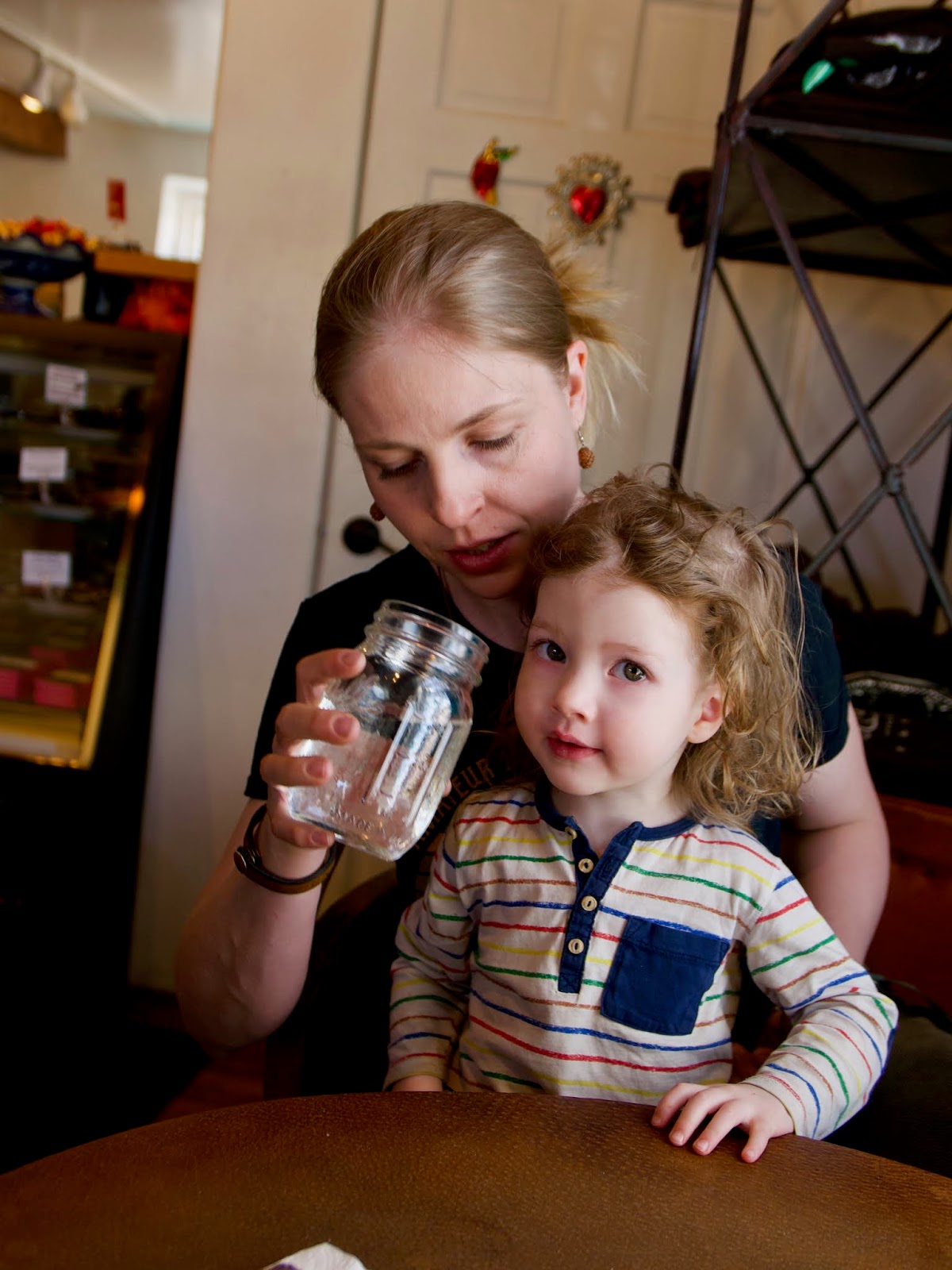
Our adopted niece Jas and her daughter Zea visited us in Santa Fe. They live on an organic farm out of Truchas.

Literary arts are foundation to Santa Fe culture, as well. D.H. Lawrence, Tony Hillerman, and Douglas Adams are but a few of the authors to call Santa Fe home, at least for part of the year. There is also a tremendous foody culture in the city, with fine dining restaurants located on almost every corner. 
Love Santa Fe.

Santa Fe has everything we like in a city—food, culture, golf, friendly people, lovely weather. 

The Center of the Ancient World
Loading up the car before dawn to drive to Chaco Canyon.

Santa may be a City Different, but Chaco Canyon is called the Center of the Ancient World. With its ten major Pueblo Great Houses and over 10,000 years of human history, Chaco Culture National Historical Park is one of America’s great treasures. The park has been listed in the National Registry of Historic Places, designated an International Dark Sky Park, and recognized as a UNESCO World Heritage Site (1987). The park is visited by about 40,000 visitors a year—it would be more but at three hours from either Albuquerque or Santa Fe with the closest decent lodging an hour and a half away in Bloomfield, and being 21 miles off the major highway (US 550) with 16 miles of the road not paved and not passable in all conditions, the site is fairly isolated.

Scenery on the way to Chaco Canyon.

Fajada Butte is famous for its special astronomical petroglyphs.
The park at 6,800’ elevation has no food available, but it does have a seven-mile paved loop road with access to many of the major Pueblos and miles of hiking trail to other Pueblos and sites. The feature attractions at Chaco Canyon are the Ancestral-Puebloan (Anasazi) building sites called Great Houses or Pueblos. These massive multi-story Great Houses are fascinating—oriented to solar, lunar, and cardinal directions, complex architecture using masonry techniques unique to their time—and are the origins of several Navajo clans and ceremonies. These structures, some containing as many as 600 rooms, were built and used between 850 and 1250 AD and are still recognized as an important step in the spiritual migration of the Ancestral-Puebloan people.
Hungo Pavings Great House was the first Pueblo we visited in the canyon.

Pueblo Bonito is the largest of the structures in the canyon and at one time contained over 600 rooms.

We walked a short 1/2 mile trail between Bonito and Chetro Katl great House.

One of the big mysteries of Chaco Canyon is why the site and the Great Houses were abandoned? Nobody knows for sure, but several ideas may be relevant. With the development of other cultural centers (Mesa Vere, at Aztec, and Chuska mountains) people may have shifted away from Chacoan ways. 
Casa Rinconada Great Kiva was the largest of more than 100 kivas in the canyon. The kivas are ceremonial gathering rooms.

Chaco Canyon had always been an ecologically iffy location, but climate change may have made it an impossible location. Natural migration of peoples seeking better conditions may have played a part in Chaco’s demise, as well.
The architecture throughout Chaco Canyon is interesting.

Pueblo del Arroyo.

More view of Pueblo Bonito.


Mesa Verde is visited by almost three-quarters of a million visitors a year whereas Chaco Canyon gets only 40,000. Both are worth our time to explore. Certainly, Chaco Canyon is much more difficult to visit, but the experience is not to be missed. Chaco Canyon, especially in the spring and fall, is magical.
We found some good home-style cooking at The Roadhouse in Bloomfield, NM, an hour and a half from the canyon.


Next: Spring in the Southwest, Part 2 (Duh!)